
Do Charedim Pray for the Success of the State of Israel? Why Don’t They Say the Prayer for the State in Shul?
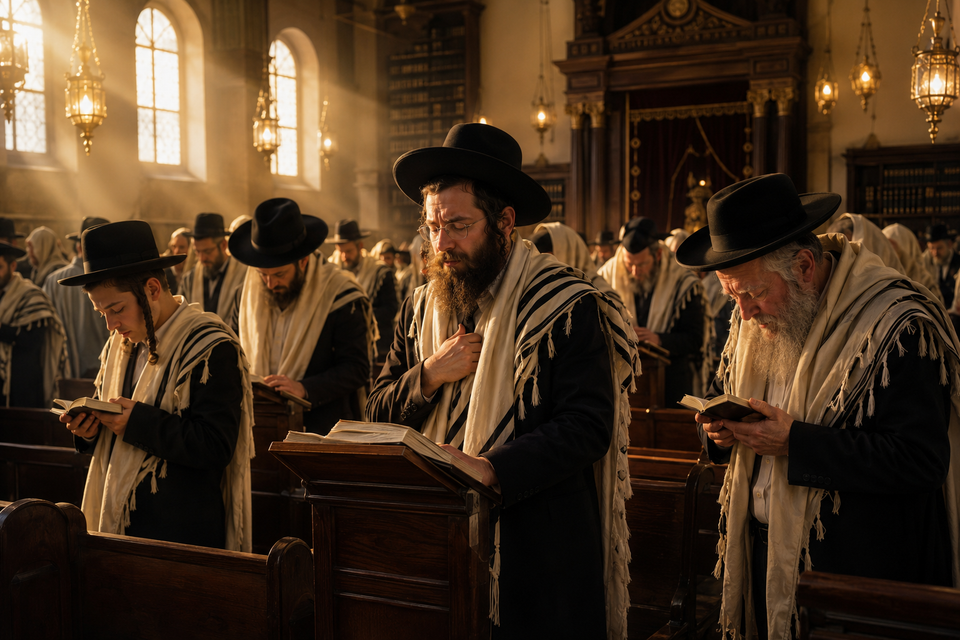
Yes — Charedim Daven Fervently for Every Jew: in Eretz Yisrael and Across the Entire World; for the Safety and Success of the Soldiers Who Risk Their Lives; for the Healing of Every Jew Wounded in War or Terror. What Most Charedi Shuls Do Not Recite Is the Specific Tefillah l'Shlom HaMedinah — and Not Out of Indifference, but for Several Distinct Reasons That Each Stand on Their Own: the Problematic Wording; the Problem of Praying for the Success of a Secular Entity Built Against Torah; the Problem of Inserting Newly-Composed Prayers Into the Fixed Davening; and the Question of Who Has the Authority to Compose a Prayer That Enters the Sacred Liturgy
This question touches a point that is frequently misunderstood, and the misunderstanding causes real hurt. Many Jews — particularly those raised in Religious Zionist or secular homes — notice that in most Charedi shuls across Eretz Yisrael, the Tefillah l'Shlom HaMedinah (the "Prayer for the Welfare of the State of Israel") is not recited, and they draw a painful conclusion: Do Charedim not care about the country and its people?
The conclusion is wrong. Charedim daven, constantly and with their whole hearts, for the safety and wellbeing of their fellow Jews. What most Charedi shuls do not recite is one specific, officially-composed prayer — and the reasons are several, distinct, and each independently sufficient. They are not reasons of indifference to fellow Jews. They are reasons of theology, of halacha, and of the sacredness of the liturgy.
Before the objections, the affirmation — because it is the most important part and it is the part most often missed.
I. Yes — Charedim Daven for Every Jew, Everywhere
Let this be stated without any qualification: Charedim daven fervently for the safety and wellbeing of every Jew — not only in Eretz Yisrael, but across the entire world.
The Charedi tefillah is not bounded by the borders of the State. We daven for Klal Yisrael as a whole — for Jews in Eretz Yisrael, in America, in Europe, in every place Jews are found, in danger or in peace. The daily prayer for acheinu kol beis Yisrael — "all our brothers of the house of Israel, those in distress and those in captivity, whether on the sea or on the dry land" — encompasses every Jew everywhere, with no border drawn around any one country. Our concern is for the entire Jewish people, wherever they are.
And within that, let it be said clearly and without hedging: Charedim daven for the safety and success of the soldiers who risk their lives to protect Jews. When Jewish soldiers go into danger, Charedim daven for their safe return — whatever those soldiers' personal level of observance, because every one of them is a Jewish brother putting his life on the line for other Jews. We daven for their success in protecting Jewish lives. We daven for their safety. And we daven with anguish for every Jew — soldier or civilian — wounded in war or in a terror attack, for their complete and speedy healing, refuah sheleimah, body and soul. When terror strikes, when war comes, when the wounded fill the hospitals, the Charedi yeshivos and communities respond immediately — with Tehillim, with fasting, with extra Torah learning, with public tefillah, storming the heavens on behalf of every Jew in danger.
There is no shortage of Charedi tefillah for the Jews of Eretz Yisrael, for the soldiers, for the wounded, and for Jews around the world. There is an abundance of it. The question, then, is not whether Charedim pray for their fellow Jews — they unquestionably do, fervently and constantly. The question is specifically about one officially-composed prayer, the Tefillah l'Shlom HaMedinah, and why it is not part of the Charedi nusach.
There are four distinct reasons, and each stands on its own.
II. The First Issue: The Wording Itself
The Tefillah l'Shlom HaMedinah was composed in 1948, shortly after the establishment of the State, under the auspices of the Chief Rabbinate (associated principally with Rabbi Yitzchak HaLevi Herzog, with Rabbi Ben-Zion Meir Chai Uziel as Sephardi Chief Rabbi). Its wording contains a phrase that is, by itself, sufficient to make the prayer unacceptable to the Charedi world. It describes the State as:
"Reishit tzmichat geulateinu."
"The beginning of the flowering of our redemption."
This is not a request for safety or peace. It is a theological assertion — a declaration that the secular State of Israel is the beginning of the geulah, the first stage of the messianic redemption.
The Charedi world cannot affirm this assertion. In the Torah's framework — as codified by the Rambam (Hilchos Melachim 11–12) and developed across this series — the geulah comes with the Melech HaMoshiach, the rebuilding of the Beis HaMikdash, the restoration of the Sanhedrin, and the national teshuva of Klal Yisrael. It is not a political or military achievement, and it is certainly not inaugurated by a secular movement whose founders explicitly rejected Torah. To declare the secular State — built on secular nationalism by leaders who in many cases openly opposed Torah — to be "the beginning of the flowering of our redemption" is, in the Charedi understanding, a fundamental category error: it credits the vessel with being the Source. It identifies a secular political structure as the opening act of the messianic redemption.
To recite this phrase, every Shabbos, as fixed liturgy, would be to affirm a hashkafah the Charedi world rejects. The wording itself — these three words — is the first and most visible reason the prayer is not said.
III. The Second Issue: Praying for the Success of a Secular Entity
The second issue runs deeper than the geulah phrase, and it would remain even if that phrase were removed. The prayer asks for the welfare and success of "the State" — the medinah — as an entity. And this raises a question the Charedi world cannot easily get past: can we ask Hashem to grant success to a secular entity whose very framework stands against Torah?
This requires a precise distinction. Charedim absolutely daven for the Jews who live within the State — for their safety, their wellbeing, their flourishing. What is different is praying for the success of the secular State as a project, as an entity, as a thing in itself. The State of Israel, as a structure, is built on secular nationalism, on governance frequently exercised against Torah interests, on a legal and cultural framework that in many areas actively opposes the Torah way of life. To pray for the "success" of that entity as such — not the safety of its Jews, but the flourishing of the secular-nationalist project itself — is to pray for the success of something the Charedi world believes should ultimately give way to Malchus Beis David.
The distinction is sharp: we daven for the people; we do not daven for the success of the secular project that governs them. We want every Jew in the land protected and thriving. We do not ask Hashem to prosper a secular state as a secular state — to strengthen the very framework that conscripts yeshiva students, that exercises power against Torah institutions, that embodies the secular-nationalist substitution for Torah identity that this series has examined at length. Praying for the welfare of the Jews is one thing. Praying for the success of the entity is another. The Charedi world does the first; it cannot do the second.
IV. The Third Issue: Inserting New Prayers Into the Fixed Tefillah
The third issue is independent of the State entirely. It concerns the integrity of the fixed liturgy itself.
The Charedi world treats the nusach hatefillah — the fixed text of the davening — with enormous care and a deep reluctance to innovate. The siddur is not a collection of nice sentiments that any generation may add to at will. It is a sacred structure, its core formulations established by the Anshei Knesses HaGedolah and developed across the generations by the greatest authorities of Klal Yisrael, treated with awe, transmitted with precision, guarded against alteration. The principle, emphasized in the Lithuanian tradition (Rav Chaim of Volozhin and others), is that one does not lightly insert new compositions into the fixed davening.
A prayer composed in 1948 — whatever its content — runs against this principle simply by being a new insertion into the fixed liturgy. Even setting aside every objection to the State, the wording, and the theology, the Charedi world approaches the introduction of any newly-composed prayer into the formal davening with great caution. The fixed tefillah is not a place for innovations of recent vintage; it is the transmitted avodah of Klal Yisrael across millennia. To place a 1948 composition into the midst of that structure — among the words of the Anshei Knesses HaGedolah — is itself a problem, independent of what the composition says.
V. The Fourth Issue: Who Composes a Prayer That Enters the Sacred Liturgy
The fourth issue is perhaps the most fundamental, and it is closely related to the third. The question is not only whether new prayers may be added to the fixed davening, but who has the authority to compose one that does.
Consider what the fixed tefillos actually are. The Shemoneh Esrei was composed by the Anshei Knesses HaGedolah — the Men of the Great Assembly, a body that included the last of the prophets and the greatest sages of their generation, men of towering kedushah operating with a measure of ruach hakodesh. The prayers and formulations of the siddur come from Chazal, from the Tana'im and Amora'im, from the great Rishonim — figures whose spiritual stature is almost unimaginable to us, and whose words were composed with a depth and precision that shaped the very channels through which Klal Yisrael's tefillos ascend.
The words of our davening are not merely meaningful sentences. They are formulations of extraordinary spiritual power, composed by the greatest souls in Jewish history, calibrated with a precision we cannot fully grasp. This is why the mesorah guards the nusach so carefully — because the people who composed it operated on a level that no later generation can match.
Against this backdrop, the question of who composed the Tefillah l'Shlom HaMedinah, and within what framework, becomes unavoidable. It was composed in 1948, within the religious-Zionist establishment, to serve a particular national-religious vision. Whatever the personal stature of those involved, a prayer composed in the modern era, within a specific ideological framework, simply does not carry the authority of the Anshei Knesses HaGedolah and the Rishonim whose words constitute our fixed davening. To insert such a composition into the sacred liturgy — to place modern, ideologically-framed words alongside the words of the men who shaped the spiritual channels of Klal Yisrael's prayer — is, from the Charedi perspective, to misunderstand what the fixed tefillah is and who has the standing to compose it.
This is not a judgment about the sincerity or learning of those who composed the prayer. It is a recognition of the unbridgeable gap between any modern composition and the formulations of the Anshei Knesses HaGedolah — and of the care required before anything is placed into the fixed davening alongside their words.
VI. The More Accurate Picture — Non-Adoption
Taken together, these four issues explain why the most accurate description of the Charedi relationship to this prayer is non-adoption rather than, in most cases, a formal "ban."
The mainstream Charedi world — Lithuanian, Chassidic, and Sephardic — simply never adopted the Tefillah l'Shlom HaMedinah into its nusach. The prayer was composed within and for the religious-Zionist framework, and it became part of the liturgy of the communities that share that framework. The Charedi communities, which share neither the framework nor the theology, never incorporated it — for all four reasons above, each of which would independently weigh against adoption.
In some communities the rejection is active and explicit. The Satmar Rav (Rabbi Yoel Teitelbaum zt"l), consistent with Vayoel Moshe, regarded the prayer's geulah framing as a serious theological error, and its recitation is prohibited in Satmar institutions worldwide. The Eidah HaChareidis and the stringently anti-Zionist Chassidic communities similarly reject it outright. The mainstream Lithuanian and Chassidic gedolim did not adopt it and did not permit its introduction into their institutions.
VII. What Charedim Do Pray
The absence of the Tefillah l'Shlom HaMedinah from the Charedi nusach does not mean the absence of prayer for fellow Jews. On the contrary — the Charedi davening is saturated with it.
Charedi communities recite Tehillim for the safety of Jews in danger — in Eretz Yisrael and everywhere — constantly in times of crisis and regularly as ongoing practice. The prayer for acheinu kol beis Yisrael encompasses every Jew in distress anywhere in the world. In times of war and terror, Charedi communities add special tefillos, organize mass Tehillim gatherings, increase Torah learning as a merit for Klal Yisrael, and daven with anguish for the safety of the soldiers and the healing of the wounded.
And the fixed Shemoneh Esrei itself — composed by the Anshei Knesses HaGedolah — is filled, three times every day, with prayers for everything that matters most: the ingathering of the exiles ("teka b'shofar gadol l'cheiruseinu"), the restoration of the judges and the Sanhedrin ("hashivah shofteinu k'varishonah"), the rebuilding of Yerushalayim ("v'lirushalayim ircha b'rachamim tashuv"), and the restoration of Malchus Beis David ("es tzemach David avdecha m'heirah satzmiach"). The Charedi Jew prays for the true geulah three times a day, in the words the mesorah gave him. What he does not do is recite a modern composition declaring the secular State its beginning.
VIII. The Closing Position
Do Charedim pray for the success of the State of Israel?
They pray, with all their hearts, for every Jew — in Eretz Yisrael and around the world; for the safety and success of the soldiers who risk their lives; for the healing of every Jew wounded in war or terror; for the peace and protection of all Klal Yisrael; and for the true and complete geulah, three times daily, in the words of the Anshei Knesses HaGedolah. What they do not recite is the Tefillah l'Shlom HaMedinah — for four distinct reasons, each sufficient on its own:
The wording — the declaration of "reishit tzmichat geulateinu," which credits the secular State as the beginning of the redemption, a theological claim the Charedi world cannot affirm. The entity — the problem of praying for the success of a secular structure built against Torah, as distinct from praying for the welfare of its Jews. The innovation — the insertion of a newly-composed prayer into the carefully-guarded fixed liturgy. And the authority — the question of who has the standing to compose a prayer that enters the sacred davening alongside the words of the Anshei Knesses HaGedolah and the Rishonim.
This is not "yes to the State" or "no to the State." It is "yes to prayer for our fellow Jews — every one of them, everywhere — and no to a foreign prayer inserted into our standard order of davening for an entity and an ideology we do not pray for." And it is important to see that these objections are not merely about a few words that could be edited. Even if one removed "reishit tzmichat geulateinu" and adjusted the problematic phrases, the Charedi world still would not recite this prayer — because the prayer is, at its core, a prayer for the welfare and success of the secular State as such, and that is not something the Charedi world prays for. Fixing the wording would address the first objection; it would not touch the second, third, or fourth. We do not pray for the secular state and its ideology, we do not insert foreign compositions into our fixed order of davening, and we do not place modern ideological prayers among the words of the Anshei Knesses HaGedolah — regardless of how the specific phrases are worded.
Charedim daven for the people with their whole hearts: for the Jews of Eretz Yisrael and the Jews of the world, for the soldiers and the wounded, for safety and peace and teshuva and the true geulah. They decline to recite a prayer that asks Hashem to prosper the secular entity as such, that was newly composed in the modern era and inserted into the fixed order of our davening, and whose words were placed alongside a liturgy that comes from the greatest souls in Jewish history.
They pray for every Jew. For the soldiers. For the wounded. For safety, for peace, for teshuva, for geulah. But not a proclamation that turns a secular government into the dawn of the redemption — because the dawn of the redemption, when it truly comes, will need no modern prayer to announce it. It will be the unmistakable work of Hashem alone, and we will know it by the words the Anshei Knesses HaGedolah already gave us to await it.
Sources
The affirmation — what Charedim do daven for
- The daily prayer for acheinu kol beis Yisrael — all our brothers of the house of Israel, in distress or captivity, encompassing every Jew worldwide
- The recitation of Tehillim for the safety of Jews in danger, in Eretz Yisrael and everywhere, and especially in times of war and terror
- Davening for the safety and success of Jewish soldiers and the refuah sheleimah of all wounded in war or terror
- The daily Shemoneh Esrei prayers for the ingathering of exiles, the restoration of the Sanhedrin, the rebuilding of Yerushalayim, and the restoration of Malchus Beis David
The prayer and its origin
- The Tefillah l'Shlom HaMedinah, composed in 1948 under the auspices of the Chief Rabbinate (associated principally with Rabbi Yitzchak HaLevi Herzog, with Rabbi Ben-Zion Meir Chai Uziel as Sephardi Chief Rabbi)
- The disputed phrase: "reishit tzmichat geulateinu" — "the beginning of the flowering of our redemption"
- The prayer's adoption in the Religious Zionist liturgical world and its non-adoption in the Charedi world
Issue 1 — the wording (the geulah claim)
- Rambam, Mishneh Torah, Hilchos Melachim u'Milchamos 11–12 — the geulah as coming through the Melech HaMoshiach, the Beis HaMikdash, the Sanhedrin, and national teshuva
- The Source vs. Vessel framework (developed in "Yes, We See the Miracles, No the State Is Not the Geulah")
Issue 2 — praying for a secular entity not in line with Torah
- The distinction between praying for the welfare of the Jews of the land (which Charedim do) and praying for the success of the secular State as an entity (which they do not)
- The framework of the State as a secular-nationalist structure that should ultimately give way to Malchus Beis David (developed in "What Do Charedim Believe Will Happen to the State When Moshiach Comes?" and "What Is the Torah's View on Nationalism?")
Issue 3 — adding a new prayer into the fixed order of davening
- The sacredness of the nusach hatefillah and the objection to inserting a newly-composed prayer into the established order of the davening
- The Lithuanian tradition (Rav Chaim of Volozhin and others) on the gravity of the fixed liturgy
- This is not a question of the mechanics of berachos; it is the more basic objection to introducing a foreign, newly-composed prayer into our standard order of tefillah
Issue 4 — the authority to compose liturgy
- The Anshei Knesses HaGedolah as the composers of the Shemoneh Esrei — a body including the last prophets and the greatest sages, operating with ruach hakodesh (Talmud Bavli, Berachos 33a; Megillah 17b–18a on the establishment of the tefillah)
- The composition of the fixed liturgy by Chazal and the great Rishonim; the unbridgeable gap between any modern composition and the formulations of the Anshei Knesses HaGedolah
- The principle that who composes a prayer entering the fixed davening is of fundamental importance
The Charedi position across the spectrum
- The Satmar Rav (Rabbi Yoel Teitelbaum zt"l), Vayoel Moshe — active prohibition in Satmar institutions worldwide
- The Eidah HaChareidis and the stringently anti-Zionist Chassidic communities — outright rejection
- The mainstream Lithuanian and Chassidic gedolim — non-adoption into the Charedi nusach
- Note: for most of the Charedi world the accurate description is non-adoption combined with the four objections, rather than a uniform formal "ban"; active prohibition is most associated with Satmar and the Eidah HaChareidis. Specific "forbidding" quotations attributed to individual gedolim in popular treatments could not be verified to specific sources and are represented here as the documented framework