
What Do Charedim Believe Will Happen to the State of Israel When Moshiach Comes?
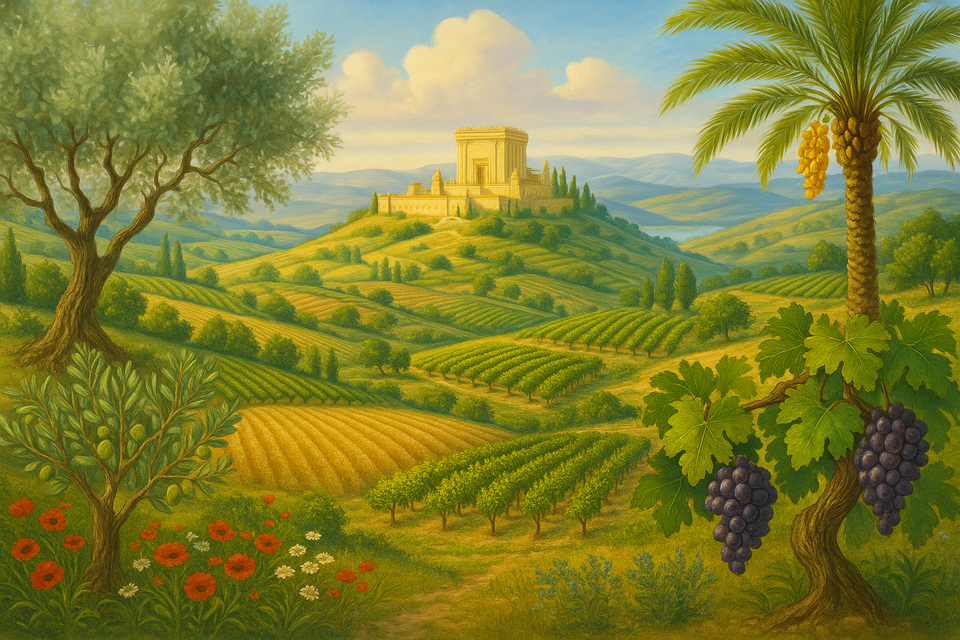
The State of Israel Is a Temporary Structure — It Will Not Exist When Moshiach Comes. No Knesset, No Secular Courts, No Flag, No Hatikvah; in Their Place, Malchus Beis David, the Restored Sanhedrin, and Torah as the Law of the Land. We Do Not Desire the State's Violent Downfall — That Would Mean the Death of Countless Fellow Jews — and We Daven That the Geulah Comes Peacefully Through National Teshuva. But Honesty Requires Admitting We Cannot Guarantee It Will: the Mesorah Does Not Promise a Painless Transition. What Is Certain Is That the Secular State Does Not Endure Into the Messianic Era; How It Gives Way Depends on Us
To understand what the Charedi world believes will happen to the State of Israel when Moshiach comes, we must begin where this entire series began: with the distinction between the Source and the vessel.
Across these articles we have argued that the State of Israel is a vessel — a framework that Hashem has used, through which He has worked miracles and preserved millions of Jewish lives — but that it is not the geulah, not an object of religious significance in itself, and not the realization of the Jewish people's ultimate destiny. The destiny of Am Yisrael was never political sovereignty as an end in itself. It was always something infinitely greater: the revelation of Malchus Hashem, the Kingship of Hashem, over all the earth, through the restoration of Malchus Beis David and the establishment of Torah as the framework of all of human life.
The question of what happens to the State when Moshiach comes is therefore really a question about the relationship between the vessel and what it points toward. And the Charedi answer has two parts that must be held together honestly.
The first part is certain: the secular State does not endure into the era of Moshiach. It is a temporary structure — a framework of the hester-panim era — and when Moshiach comes, it will not exist. No Knesset, no secular courts, no Israeli flag, no Hatikvah. In their place: Malchus Beis David, the restored Sanhedrin, the rebuilt Beis HaMikdash, and Torah as the single law of the land. On this the mesorah is clear.
The second part is not certain, and we will not pretend otherwise: the manner in which the State gives way. If Klal Yisrael does teshuva on a national scale, the geulah can come b'rachamim — with mercy — and the old structures can give way gently, the way a candle's light becomes irrelevant when the sun rises, with no Jew harmed. That is our deepest hope and what we daven for. But the mesorah does not guarantee that path. If the national teshuva does not come, the transition may arrive through the upheavals the prophets describe, and we cannot rule out that the State could be conquered or swept away in turbulence and bloodshed. We do not desire that — it would mean the death of countless fellow Jews, which no Jew should ever want. But honesty before comfort requires admitting it is possible. The outcome for the secular structure is certain; the manner of its passing depends substantially on us.
We work through the vision below.
I. The Foundational Truth: The Destiny Is Prophetic, Not Political
The starting point is that the ultimate purpose of Jewish existence was never national independence or self-governance. It was, and is, the revelation of Hashem's Kingship over the world.
The daily Aleinu prayer — recited three times a day by every observant Jew, and concluding with a verse from the navi Zechariah — states the goal of all history:
"V'haya Hashem l'Melech al kol ha'aretz, bayom hahu yihyeh Hashem echad u'shmo echad."
"And Hashem will be King over all the earth; on that day Hashem will be One and His Name will be One." (Zechariah 14:9)
This is the destiny. Not a Jewish nation-state taking its place among the nation-states of the world, but the universal recognition of Hashem's Kingship — the moment when all of humanity acknowledges the One God and His sovereignty over creation. The Jewish people's role in history is to be the vehicle through which this recognition comes to the world. Every other framework — including political sovereignty — is instrumental to this end, never the end itself.
This is why the Charedi world does not, and cannot, regard the present secular State as the fulfillment of Jewish destiny. The present State is built on secular nationalism, democratic governance, and Western political values — frameworks that are, whatever their practical merits, simply not the framework of Malchus Hashem. The State exists within the pre-Moshiach reality of hester panim — the concealment of Hashem's full presence that characterizes the current era of history. When Moshiach comes, the concealment ends, and everything organized around the concealment is transformed.
II. The Restoration of Malchus Beis David
The central political transformation of the messianic era is the restoration of the Davidic monarchy — Malchus Beis David.
The Rambam, in Hilchos Melachim u'Milchamos 11:1, opens his codification of the messianic era with the foundational statement:
"HaMelech HaMoshiach asid la'amod u'lhachzir malchus beis David l'yoshnah, l'memshalah ha'rishonah."
"The King Moshiach will arise and restore the kingdom of the house of David to its former state, to its original sovereignty."
The framework is precise. The governance of the messianic era is not a continuation or reform of secular democratic politics. It is the restoration of a fundamentally different kind of sovereignty — the Davidic monarchy, led by the Melech HaMoshiach, a verified descendant of David HaMelech, ruling according to the Torah. This is not government by parties, coalitions, elections, and secular courts. It is Malchus — kingship — under Hashem's law, led by a king whose authority derives not from the ballot box but from his lineage, his Torah, his fulfillment of the messianic role, and ultimately the recognition of the restored Sanhedrin and the manifest hand of Hashem in history.
Critically — and this is essential to the Rambam's vision — this transformation is described by the Rambam in naturalistic rather than apocalyptic terms. The Rambam (Hilchos Melachim 12:1-2) explicitly rejects the notion that the messianic era requires a violent upending of the natural order: "Do not imagine that in the days of Moshiach anything of the natural order will be nullified, or that there will be some innovation in the work of creation; rather, the world continues according to its way." He cites the teaching of Shmuel: "Ein bein olam hazeh liymos haMoshiach ela shibud malchuyos bilvad" — the only difference between this world and the messianic era is the end of subjugation to the nations. The messianic transformation is, in the Rambam's mainstream view, a transformation of governance, recognition, and spiritual reality — not a science-fiction cataclysm.
This bears directly on the question of the State. The Rambam's naturalistic framework suggests that the transformation of the present political order will be exactly that — a transformation of governance, in which the structures organized around secular sovereignty give way to the structures of Malchus Beis David, as the Jewish people and the world come to recognize the truth. Not necessarily a violent collapse — a transformation.
III. Torah as the Law of the Land
The second great transformation is legal: the replacement of the secular legal system with Torah law, administered by the restored Sanhedrin.
In the present State, there are two parallel legal tracks — the secular civil law administered by the State's courts, and the halachic system administered by the batei din. The relationship between them is contested, and much of the Charedi-secular conflict in the present era turns on the friction between these two systems. In the messianic era, this duality ends. There will be one law: the Torah.
The Rambam (Hilchos Melachim 11:1, continuing) describes the Moshiach building the Beis HaMikdash and gathering the dispersed of Israel, and (in 11:3-4) restoring the practice of all the mitzvos and the full operation of Torah law. The Sanhedrin — the supreme Torah court of seventy-one — will be reestablished, as the navi Yeshayahu foretells (Yeshayahu 1:26): "V'ashivah shoftayich k'varishonah v'yo'atzayich k'vatchilah" — "I will restore your judges as at first and your counselors as in the beginning."
And the source of law and guidance for all the world will be Torah emanating from Yerushalayim, as Yeshayahu prophesies (Yeshayahu 2:3):
"Ki mi'Tziyon teitzei Torah u'dvar Hashem mi'Yerushalayim."
"For from Zion shall go forth Torah, and the word of Hashem from Yerushalayim."
Not secular law, not democratic legislation, not Western jurisprudence — Torah. The legal transformation of the messianic era is the unification of all of life under the single framework of Torah, administered by the Sanhedrin and the Davidic monarchy, with Yerushalayim as the source of Torah guidance for the entire world.
IV. The Spiritual Revolution: Clarity, Teshuvah, and the End of Division
The deepest transformation of the messianic era is not political or legal but spiritual: the lifting of the hester panim and the flooding of the world with clarity about Hashem.
The Rambam (Hilchos Melachim 12:5) describes the spiritual reality of the messianic era:
"U'b'oso ha'zman lo yihyeh sham lo ra'av v'lo milchamah… she'ha'tovah tihyeh mushpa'as harbeh… v'lo yihyeh esek kol ha'olam ela lada'as es Hashem bilvad… she'ne'emar: 'ki mal'ah ha'aretz de'ah es Hashem ka'mayim la'yam mechasim.'"
"In that time there will be neither famine nor war… and good things will flow in abundance… and the occupation of the entire world will be solely to know Hashem… as it says: 'for the earth will be filled with the knowledge of Hashem as the waters cover the sea'" (citing Yeshayahu 11:9).
This is the heart of the matter. The messianic era is defined, in the Rambam's codification, by universal knowledge of Hashem. The entire occupation of the world will be the knowledge of Hashem. And with that clarity comes the end of the divisions that define the present era.
The navi Malachi (3:24), in the closing words of the Neviim, foretells the reconciliation that Eliyahu HaNavi will herald before the coming of Moshiach:
"V'heishiv lev avos al banim v'lev banim al avosam."
"And he will return the hearts of fathers to their children, and the hearts of children to their fathers."
In the light of messianic clarity, the great divisions of the present era fall away. The disagreements between Charedim, Dati Leumi, and secular Jews — disagreements that this very series has engaged at length — will dissolve, not because one side "won" the argument, but because the truth will become manifest to all. No Jew will need to argue about values and priorities, because all will be bathed in the same divine clarity. The arguments of the present era are arguments conducted in the dark of hester panim; when the light comes, the need for them ends.
V. What Happens to the State Itself
We can now address the specific question directly. What happens to the political entity known as the State of Israel when Moshiach comes?
The bottom line is clear and must be stated plainly: the State of Israel, as a secular political structure, is temporary. It will not exist in the time of Moshiach. There will be no Knesset, no secular courts, no ministries of a secular nation-state, no Israeli flag, no Hatikvah. These are the symbols and structures of a secular nationalist framework, and that framework does not continue into the era of Malchus Beis David. What replaces them is not a reformed version of the secular State but something categorically different: the Davidic monarchy, the Sanhedrin, the Beis HaMikdash, and Torah as the single law of the land. The present State is a way-station, not a destination — a temporary arrangement of the hester-panim era that gives way entirely to the revealed Malchus Hashem.
How this transition occurs is the part we must be honest about, because the mesorah does not promise that it will necessarily be gentle.
There are two paths, and which one we walk depends on us. The Gemara (Sanhedrin 97b–98a) records the dispute and ultimately teaches that the geulah can come in one of two ways: b'itah (in its set time, which may come through suffering and upheaval) or achishenah (hastened, coming with mercy and peace) — and that the difference between them depends on whether Klal Yisrael does teshuva. The Rambam (Hilchos Teshuvah 7:5) states it directly: "The Torah has already promised that Israel will ultimately do teshuva at the end of their exile, and immediately they will be redeemed." Teshuva is the hinge. If Klal Yisrael returns to Hashem on a national scale, the geulah can come b'rachamim — peacefully, as a transformation in which the old structures simply give way to the new without catastrophe. The candle's light becomes irrelevant when the sun rises, and nothing is shattered.
But we cannot guarantee that path, because it depends on a national teshuva that has not yet happened. And here honesty requires what comfort would prefer to avoid: there is no guarantee that Moshiach comes peacefully. The prophetic and Talmudic sources describing the end of days — the wars of Gog u'Magog (Yechezkel 38–39), the chevlei Moshiach (the birth-pangs of Moshiach, Sanhedrin 98b), the upheavals the navi and Chazal describe — make clear that the transition can be turbulent, even frightening. We cannot say with certainty that the secular State will simply be peacefully transformed. It is entirely possible, within the framework of the mesorah, that the State could be conquered, fall, or be swept away in the upheavals that precede or accompany the coming of Moshiach. The sources do not promise otherwise, and we should not pretend they do.
This is sobering, and it must be said with the right heart. We do not want this. We do not pray for the violent downfall of the State — because the violent downfall of the State would mean the death and suffering of millions of our fellow Jews, and that is a catastrophe no Jew should ever desire or welcome. Across this series we have insisted on ahavas Yisrael toward every Jew, and that insistence applies here most of all. The Charedi yearning is emphatically not for bloodshed, chaos, or the suffering of the Jews the State shelters. The yearning is for the geulah — and the deepest hope is that it comes b'rachamim, through teshuva, peacefully, with no Jew harmed.
But hoping it comes peacefully and being able to guarantee it comes peacefully are two different things. The honest position is this: we daven and strive for the geulah to come through national teshuva, gently and with mercy; we recognize that if it does not, the transition may be frightening and may involve real upheaval; and we hold, throughout, that whichever way it comes, the secular State is a temporary structure that will not survive into the era of Moshiach. The outcome for the State is certain — it does not continue. The manner of the transition is not certain, and depends substantially on us.
Some Charedi authorities have spoken in the sharper register that this honesty requires. Rav Elchonon Wasserman Hy"d, in his analysis of the pre-messianic era (Ikvesa D'Meshicha), wrote that frameworks built on the rejection of Torah cannot endure into the messianic reality. The Steipler Gaon (Rabbi Yaakov Yisrael Kanievsky zt"l) is recorded in a similar vein — that a government in Eretz Yisrael not built on Torah has no permanence and will ultimately be uprooted. These statements are not expressions of a desire for Jewish suffering; they are sober assessments of the impermanence of a secular structure in the face of the coming Malchus. Whether the uprooting comes gently through transformation or harshly through upheaval depends on the teshuva of Klal Yisrael — but that the secular structure does not endure is, in this framing, certain.
VI. The Beginning of True Jewish Sovereignty
It must be emphasized, against a persistent misunderstanding: the Charedi vision is not anti-Jewish-sovereignty. It is the opposite. Charedim are the champions of true Jewish sovereignty — they simply hold that true Jewish sovereignty is Malchus Beis David under Hashem's Torah, not secular nationalism under Western political values.
When Moshiach comes, in the Charedi vision:
- There will be Jewish rule — but it will be the rule of the Melech HaMoshiach under the law of the Torah, not secular democratic governance
- There will be a Jewish homeland — the fully realized Eretz Yisrael, with the Beis HaMikdash rebuilt and the Sanhedrin restored, governed by Torah
- There will be Jewish national greatness — but grounded in Torah, kedushah, and yiras Shamayim, in the universal recognition of Hashem, rather than in military power or political achievement
This is not the negation of Jewish sovereignty. It is its perfection. The Charedi critique of the present secular State has never been a critique of the idea of Jewish self-governance in Eretz Yisrael; it has been a critique of secular, Torah-absent self-governance as a substitute for the real thing. When the real thing comes — Malchus Beis David — the Charedi world will embrace it with its whole heart, because it is precisely what the Charedi world has been davening for, three times a day, for two thousand years.
VII. Not a Dream — Our Mesorah
This vision is not utopian speculation. It is the mesorah — the transmitted faith of the Jewish people, codified by the Rambam, sung in the daily tefillos, and held with complete conviction across the entire Torah world.
The twelfth of the Rambam's Thirteen Principles of Faith, recited by Jews worldwide, states it:
"Ani ma'amin b'emunah sheleimah b'vias haMoshiach, v'af al pi she'yismahmeha, im kol zeh achakeh lo b'chol yom she'yavo."
"I believe with complete faith in the coming of Moshiach; and even though he may delay, nonetheless I await him every day, that he will come."
"Achakeh lo b'chol yom she'yavo" — "I await him every day." For the Charedi Jew, the coming of Moshiach is not a distant theological abstraction. It is the next stage of Jewish history, awaited daily, and capable of arriving at any moment. The transformation of the present order into Malchus Beis David is not a fantasy projected onto an unreachable future. It is the concrete object of daily tefillah and active anticipation.
VIII. The Closing Position — From Politics to Prophecy
What will happen to the State of Israel when Moshiach comes?
The secular State will not survive into the era of Moshiach — that much is certain. The Knesset, the secular courts, the ministries, the flag, the anthem, the entire apparatus of a secular nation-state — none of it continues into the era of Malchus Beis David. The political structures organized around secular sovereignty in the era of hester panim give way to Malchus Beis David, the restored Sanhedrin, Torah as the law of the land, the rebuilt Beis HaMikdash, and a world flooded with the knowledge of Hashem. The State is a temporary way-station, not a destination.
What is not certain is the manner of the transition — and here we have chosen honesty over comfort. If Klal Yisrael returns to Hashem through national teshuva, the geulah can come b'rachamim, peacefully, the secular structures giving way without catastrophe, the candle's light simply becoming irrelevant when the sun rises. That is our deepest hope, and what we daven and strive for. But the mesorah does not guarantee that path. If the national teshuva does not come, the transition may arrive through the upheavals the prophets describe — and we cannot rule out that the State could be conquered or swept away in the turbulence that precedes the geulah. We do not want this; the violent downfall of the State would mean the death of countless fellow Jews, and no Jew should ever desire that. But we will not pretend to a certainty the sources do not give us.
This is fully consistent with the framework we have developed across this entire series. The State is a vessel, not the Source. It has sheltered millions of Jews, for which we are grateful to Hashem. It has worked, in His hands, real good. But it is not the geulah, it is not the destiny, and it is not permanent. The destiny is Malchus Hashem — the revelation of Hashem's Kingship over all the earth — and when that destiny arrives, every partial and secular arrangement that preceded it is gathered up, transcended, and replaced by its fulfillment.
Charedim do not await this with hatred toward the State or its citizens. They await it with love — love for every Jew the State shelters, and love for the Hashem whose full Kingship the messianic era will reveal. The yearning is not for bloodshed but for completion: for the day when politics fades, Torah rises, the Shechinah returns to a rebuilt Yerushalayim, and the true and eternal kingdom of Am Yisrael — Malchus Beis David under Malchus Shamayim — begins. And the most fervent hope within that yearning is that it comes gently — that we earn, through teshuva, the geulah of mercy rather than the geulah of upheaval.
That outcome is in our hands. "The Torah has already promised that Israel will ultimately do teshuva at the end of their exile, and immediately they will be redeemed" (Rambam, Hilchos Teshuvah 7:5). The redemption is certain. The teshuva that determines how it comes is the work before us. Let us do it, and merit the geulah of rachamim.
This is not merely hope. It is emunah. It is the mesorah. It is, in the deepest sense, certain — because Hashem has promised it, and "af al pi she'yismahmeha, achakeh lo b'chol yom she'yavo."
Sources
The destiny as the revelation of Malchus Hashem
- Zechariah 14:9 — "V'haya Hashem l'Melech al kol ha'aretz, bayom hahu yihyeh Hashem echad u'shmo echad" — recited daily in the conclusion of Aleinu
- Yeshayahu 11:9 — "ki mal'ah ha'aretz de'ah es Hashem ka'mayim la'yam mechasim" — the earth filled with the knowledge of Hashem
- The framework of hester panim (the concealment of Hashem's presence) as defining the pre-messianic era
The restoration of Malchus Beis David
- Rambam, Mishneh Torah, Hilchos Melachim u'Milchamos 11:1 — "HaMelech HaMoshiach asid la'amod u'lhachzir malchus beis David l'yoshnah" — the restoration of the Davidic monarchy
- Rambam, Hilchos Melachim 11:3-4 — the Moshiach's restoration of the full operation of Torah and mitzvos; the criteria for identifying the Moshiach
- Rambam, Hilchos Melachim 12:1-2 — the naturalistic (non-apocalyptic) vision of the messianic era; the teaching of Shmuel that "ein bein olam hazeh liymos haMoshiach ela shibud malchuyos bilvad" — the only difference is the end of subjugation to the nations
- Talmud Bavli, Berachos 34b and Sanhedrin 91b — the source of Shmuel's teaching
Torah as the law of the land
- Yeshayahu 2:3 — "Ki mi'Tziyon teitzei Torah u'dvar Hashem mi'Yerushalayim"
- Yeshayahu 1:26 — "V'ashivah shoftayich k'varishonah" — the restoration of the Sanhedrin and the system of Torah judges
- Rambam, Hilchos Sanhedrin and the framework of the restored Sanhedrin in the messianic era
The spiritual revolution
- Rambam, Hilchos Melachim 12:5 — the messianic era defined by universal knowledge of Hashem; neither famine nor war; the occupation of the world solely the knowledge of Hashem
- Malachi 3:24 — "V'heishiv lev avos al banim" — the reconciliation heralded by Eliyahu HaNavi (the closing verse of the Neviim)
- Rambam, Hilchos Teshuvah 9:2 — the role of the messianic era in enabling the perfection of Torah life
The two paths of geulah — and the role of teshuva
- Talmud Bavli, Sanhedrin 97b–98a — the dispute over whether the geulah depends on teshuva; the two modes of b'itah (in its set time) and achishenah (hastened); Yeshayahu 60:22 — "b'itah achishenah"
- Rambam, Mishneh Torah, Hilchos Teshuvah 7:5 — "The Torah has already promised that Israel will ultimately do teshuva at the end of their exile, and immediately they will be redeemed"
- Talmud Bavli, Sanhedrin 98b — the chevlei Moshiach (birth-pangs of Moshiach); the upheavals that may precede the redemption
- Yechezkel 38–39 — the war of Gog u'Magog
- The honest position: the secular State does not endure into the messianic era (certain); whether the transition comes peacefully through national teshuva or through upheaval is not certain and depends substantially on Klal Yisrael
- Rav Elchonon Wasserman Hy"d, Ikvesa D'Meshicha — the analysis of the pre-messianic era and the impermanence of frameworks built on the rejection of Torah
- The Steipler Gaon (Rabbi Yaakov Yisrael Kanievsky zt"l), as recorded in Orchos Rabbeinu — recorded in a similar vein
- Note: that the secular structure does not endure is, in this framing, certain; whether it gives way gently through transformation or harshly through upheaval depends on the teshuva of Klal Yisrael. We do not desire a violent downfall, which would mean Jewish suffering and death; we daven for the geulah of mercy. But the mesorah does not guarantee a painless transition, and honesty requires acknowledging this.
The perfection of Jewish sovereignty
- The Charedi vision of Malchus Beis David as the perfection, not the negation, of Jewish sovereignty
- The daily tefillos for the restoration of the Davidic monarchy, the Sanhedrin, and the Beis HaMikdash (Shemoneh Esrei: "v'lirushalayim ircha", "es tzemach David", "hashivah shofteinu")
The certainty of the mesorah
- Rambam's Thirteen Principles of Faith, Principle 12 — "Ani ma'amin b'emunah sheleimah b'vias haMoshiach… achakeh lo b'chol yom she'yavo"
- Rambam, commentary to Mishnah Sanhedrin, Perek Chelek — the foundational codification of belief in the coming of Moshiach
- Rambam, Hilchos Melachim 11:1 — the ruling that one who does not believe in or await the coming of Moshiach denies the Torah and Moshe Rabbeinu
The structural relationship to other articles in this series
- "Yes, We See the Miracles, No the State Is Not the Geulah" — the Source vs. Vessel framework, here projected forward to the messianic era
- "What Is the Torah's View on Nationalism?" — the contrast between secular sovereignty and Malchus Beis David
- "Is It a Mitzvah to Live in Eretz Yisrael?" — the Land within the Torah framework
- "Sinas Chinam: The Illness That Destroyed the Beis HaMikdash" — the end of division in the light of messianic clarity