What is the Charedi View on Yom HaZikaron?
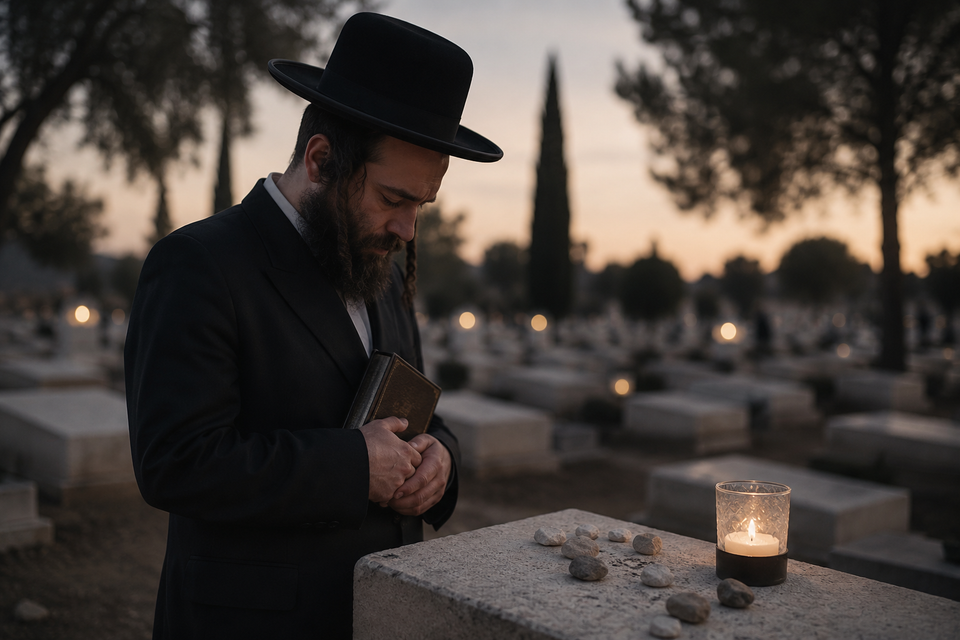
On Israel's day of remembrance for its fallen, the Charedi world grieves alongside the rest of Klal Yisrael — because a Jew who gave his life to protect other Jews carries a merit no one of us can measure. Charedim do not always mourn through the state's rituals, but the love for every Jew, and the ache at every loss, runs as deep here as it does anywhere.
There is a painful misconception that the Charedi world is indifferent to Yom HaZikaron — that because Charedim often relate differently to the day's public rituals, they must somehow feel the losses less. Nothing could be further from the truth. The Charedi community mourns every Jewish soul lost to war and terror, whatever uniform that Jew wore and whatever path he walked in life. The grief is real, and the love behind it is real. What differs is not the depth of the mourning but the language in which it is expressed. Let us explain that language — and the heart beneath it.
I. We Feel the Pain of Every Jew
Begin with the foundation, because everything else rests on it: in the Torah's understanding, Klal Yisrael is not a collection of individuals but a single living organism. "All of Israel are areivim — intertwined, responsible — one for another" (Shevuos 39a). The Chazon Ish gave this its most vivid image: the Jewish people are one body, so that when a single limb is wounded, the whole body feels the pain. This is not a metaphor we reach for on cue; it is the literal architecture of how a Jew is meant to experience his people.
It follows directly that when much of Am Yisrael is plunged into grief, a Torah Jew cannot stand outside that grief untouched. The Torah is meant to refine a person's sensitivity, never to harden it — "nosei b'ol im chaveiro," to carry the burden together with one's fellow, is among the very ways the Torah is acquired (Avos 6:6). So whatever a Charedi's relationship to the siren or the state ceremony — and that relationship varies; some pause in deference to the grief of others, some mark the moment quietly with a perek of Tehillim, some intensify their learning in the merit of the fallen — the underlying truth is constant. The mourning of the Jewish people is our mourning too. To be unmoved by it would not be a stricter form of Yiddishkeit. It would be a failure of one.
II. A Jew Who Falls Protecting Jews Is a Kadosh
Now to the heart of it, and the Charedi world says this without hesitation or qualification: a Jew who gives his life to protect other Jews has performed an act of mesiras nefesh whose merit is beyond our power to measure.
The Gemara teaches of those killed al kiddush Hashem that "no creature can stand within their bounds" in the World to Come (Pesachim 50a) — a level of spiritual elevation that the greatest tzaddikim cannot reach. A young man who places his body between his people and those who would murder them, and falls doing so, has given the most total gift a human being can give. And here a crucial principle of the Torah comes into play: we do not sit in judgment of his soul. Whatever his level of observance, whatever the ideology that surrounded his life, the act of laying down his life for Klal Yisrael is an act of staggering holiness — and his neshamah is weighed by the Ribbono Shel Olam, who sees what no human eye can, and not by us. There is a story long recounted in the name of Rav Shlomo Zalman Auerbach — told and retold precisely because it captures this truth so exactly — that when asked about traveling abroad to pray at the graves of tzaddikim, he gestured instead toward Har Herzl and its fallen soldiers. Whether or not the words came down to us perfectly, the Torah principle beneath them is solid rock: mesiras nefesh for Klal Yisrael carries a merit that humbles us all.
This recognition, it should be said, is entirely separate from the ongoing hashkafic conversation about army service and the primacy of Torah learning — a conversation this series takes up at length elsewhere. One can hold, as the Charedi world does, that the Torah's path is the highest calling and the truest protection of the Jewish people, and at the very same time honor without reservation the individual Jew who fell defending his brothers. Mourning the fallen is not a referendum on ideology. It is the recognition of a kadosh.
III. How We Mourn — and Why Not Always the State's Way
If the grief is so real, why do many Charedim hold back from the state ceremonies? The answer is the same distinction that runs through so much of Charedi life: a reservation about the framework that is not a reservation about the people it remembers.
State memorial events are frequently woven through with the themes of secular nationalism — and a Charedi who cannot endorse that ideology will often feel he cannot fully take part in a ceremony built around it. But this is emphatically not a turning away from the fallen or from their families. It is a turning toward a different mode of mourning — the mode the mesorah handed us, which the Charedi world believes does not merely express grief but actually acts upon it. We honor a fallen Jew by learning Mishnayos in his memory, by saying Tehillim and Kaddish that elevate his neshamah, by doing chesed and adding Torah to the world in his merit — for these, the Torah teaches, reach the departed soul and lift it higher in a way a moment of silence cannot. Rav Chaim Kanievsky would direct those who asked how to honor the fallen to learn Mishnayos l'ilui nishmasam; the consistent counsel of the Gedolim has been that Torah studied in a martyr's merit is the truest and most lasting tribute one can offer him. And it should be added that more and more Charedim today do take part in memorial gatherings — in their own neighborhoods, or for families they know personally — not as a political statement but as a simple, human embrace of a grieving fellow Jew.
IV. Conclusion: One Body, One Grief
So the Charedi world does not ignore Yom HaZikaron, and it never did. It mourns the fallen the way it mourns all of Klal Yisrael's sorrows — through Torah, through tefillah, through chesed, and through a sensitivity that the Torah is meant to deepen rather than dull. The loss of any Jewish life is a tragedy that tears at the whole body of Israel; and a Jew who fell defending that body is, in the Torah's eyes, a kadosh whose place we cannot fathom.
We do not measure his soul. That is Hashem's to do, and we trust Him with it completely. Our task is only this: to feel the pain as our own, to honor the fallen in the eternal language of Torah, and to pour our grief into building the very thing they died to protect — more Jewish life, more Torah, more light.
May Hashem comfort all the bereaved families of Klal Yisrael among the mourners of Tzion and Yerushalayim, may He bind the neshamos of the fallen in the bond of eternal life, and may we merit the day when He wipes the tears from every face — bimheirah b'yameinu, amen.
Sources
The unity of Klal Yisrael
- Shevuos 39a — "all of Israel are areivim, one for another" — the intertwining of the Jewish people; and the Chazon Ish's image (in Emunah uBitachon) of Klal Yisrael as one body in which the pain of one limb is felt by all (presented as his documented theme)
- Avos 6:6 — "nosei b'ol im chaveiro," bearing the burden together with one's fellow, as one of the ways the Torah is acquired
- Vayikra 19:18 — "v'ahavta l're'acha kamocha"
The merit of those who fall protecting Jews
- Pesachim 50a — "those killed al kiddush Hashem — no creature can stand within their bounds" — the immense spiritual elevation of one who gives his life, and the principle that his soul is weighed by Hashem and not by us
A note on attribution
- The story recounted in the name of Rav Shlomo Zalman Auerbach regarding the fallen of Har Herzl is widely cited (and associated with Halichos Shlomo), but is an oral account; it is offered here for the Torah principle it conveys — grounded independently on Pesachim 50a — rather than as a verified verbatim quotation. Likewise, the teachings attributed to Rav Yitzchak Hutner, Rav Chaim Kanievsky, Rav Aharon Leib Shteinman, and Rav Yosef Shalom Elyashiv — that those who die for Klal Yisrael are kedoshim, and that learning Torah (especially Mishnayos) in their merit is the truest tribute and an aliyah for the neshamah — are presented as their well-documented themes and counsel rather than as verified verbatim quotations.
The structural relationship to other articles in this series
- "Do Charedim Have Hakaras Hatov for Those Who Serve?" — gratitude toward those who protect Jewish life
- "How Charedim Feel About Charedi Soldiers" and "Why Torah Learning Is the Top Priority" — the surrounding hashkafic conversation, held separately from the mourning of the fallen
- "What Is the Charedi View on Yom HaShoah?" — another state-established day of remembrance approached through the mesorah