
Was Rav Avraham Yitzchak HaKohen Kook’s zt”l Approach in Line with Our Mesorah?
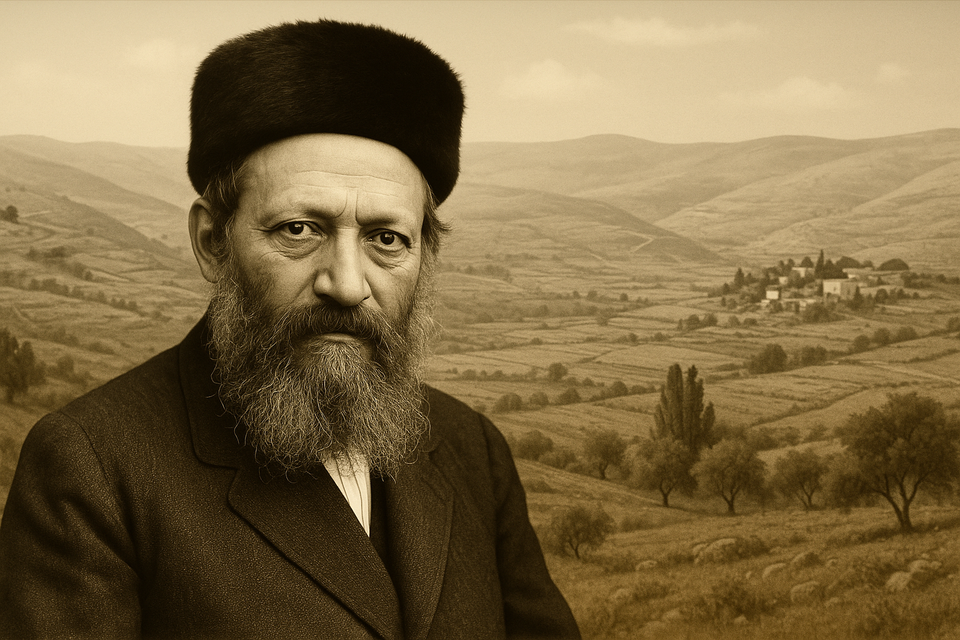
Rav Avraham Yitzchak HaKohen Kook zt"l was a towering Torah scholar and a soul of rare depth and beauty — and also the author of a hashkafa that the Gedolim of his generation, for all their genuine respect for the man, did not receive as part of the mesorah. To ask whether his approach was our mesorah is not to weigh his greatness or to judge his heart. It is to ask the single question mesorah always asks: through whom did it come down?
Few figures in modern Jewish history are held in such different lights as Rav Avraham Yitzchak HaKohen Kook. To much of the Jewish world he is a visionary of redemption; to the Charedi world he is a sincere and brilliant talmid chacham whose central ideas, with all reverence, departed from the firm path of the mesorah. This is among the most sensitive questions a Charedi publication can take up, and it must be approached with yiras Shamayim, with scrupulous honesty, and with a refusal to let disagreement curdle into disrespect. We will try to hold to all three.
I. Who Was Rav Kook
Let it be said plainly and without reservation: Rav Kook (1865–1935) was a giant. A prodigy in his youth, he learned in the great yeshiva of Volozhin under the Netziv; he was a profound lamdan, a mystic of extraordinary range, and a writer of soaring, poetic power, the author of works such as Orot, Orot HaTeshuvah, and the Igros HaRe'iyah. He was connected by marriage to one of the gedolim of the age, the Aderes (Rav Eliyahu David Rabinowitz-Teomim), and was recognized as a serious Torah authority by leading figures of his day. He served as Rav of Jaffa, later as Rav of Yerushalayim, and became the first Ashkenazi Chief Rabbi of Eretz Yisrael under the British Mandate. His love for Eretz Yisrael burned in him like a fire, and his love for every Jew — including, perhaps especially, the most distant — was real and self-sacrificing.
That esteem was not one-sided. It is well known that Rav Kook served as the mesader kiddushin at the wedding of Rav Yosef Shalom Elyashiv zt"l — a small fact that tells a large truth: in his time, even within the world that would not follow his path, Rav Kook was treated as a man of genuine stature. None of what follows is meant to diminish any of that for a moment. The question before us is narrower, and it is not about the man's greatness. It is about one specific idea.
II. The Hashkafic Shift
Rav Kook's distinctive contribution — the thing that set him apart — was a way of reading his own times. He looked at the secular Zionist pioneers, men and women who had cast off Torah observance, and saw in their national awakening not merely rebellion but a hidden, unconscious holiness: souls driven, beneath their own awareness, by a Divine current pulling the Jewish people back toward its Land and its destiny. He spoke of the era as atchalta d'geulah, the beginning of the redemption, and found in the return to the soil, the revival of Hebrew, and the idealism of the builders sparks of something sacred buried in seemingly secular vessels.
It is important to state his view fairly, because it is easily caricatured. Rav Kook did not teach that secularism is holy, or that abandoning mitzvos is good. His thought drew on deep kabbalistic concepts — the elevation of holy sparks scattered in lowly places, the idea that great spiritual light can be concealed within rough exteriors — and he applied them, daringly, to the national movement unfolding around him. His was a subtle and serious theology, not a careless one. And precisely because it was serious, the question it raised was serious too: was this reading of history part of the mesorah we received — or was it something new?
III. The Question of Mesorah
Here is the heart of the matter, and it is not a question of erudition or sincerity, both of which Rav Kook possessed in abundance. It is a question of transmission.
The Charedi world's concern was this: the idea that those actively casting off Torah could, in that very act, be building the geulah — that secular nationalism could carry redemptive, sacred significance — was, as a normative hashkafa, without precedent in the received tradition. One does not find it taught, in these terms, as the settled understanding of Chazal, the Rishonim, or the Acharonim before him. In fairness, Rav Kook's defenders contest exactly this point, arguing that he was extending authentic kabbalistic principles rather than inventing a doctrine — and that argument deserves to be acknowledged honestly rather than waved away. But this is just where the deepest Charedi principle enters. Mesorah does not govern only halacha; it governs interpretation — how Klal Yisrael is permitted to read its own history and its own redemption. "Moshe received the Torah from Sinai and transmitted it…" (Avos 1:1): an authentic path is one received, not derived afresh, however brilliant the one deriving it. And the Gemara's principle of "lo bashamayim hi" (Bava Metzia 59b) teaches that the Torah's meaning is settled by the chain of its bearers — not by inspiration, not by signs, and not by the reading of current events, however moving. The question was never whether Rav Kook's idea was beautiful or brilliant. It was whether it had been handed down — and the bearers of the mesorah concluded that it had not.
IV. What the Gedolim of His Time Said
This was not the verdict of one or two dissenters. Across the leading Torah authorities of his generation and the next, the response to Rav Kook's ideology was a consistent — and, crucially, a principled — rejection. And it is essential to be precise about its nature: in most cases the objection was never to his learning, his love of the Land, or his person, many of whom were treated with real respect. The objection was to one thing only — that his hashkafa granted spiritual legitimacy to a movement actively dismantling Torah observance.
Rav Chaim of Brisk was an uncompromising opponent of the Zionist enterprise and its ideology. Rav Elchonon Wasserman, in Ikvesa d'Meshicha, warned at length against secular nationalism as a spiritual nesayon of the age. Rav Yosef Chaim Sonnenfeld, the great leader of the Old Yishuv in Yerushalayim and Rav Kook's own contemporary, maintained toward him a relationship of personal courtesy — the two even traveled together to the settlements of the north — while declining entirely to accept his hashkafic innovations or his communal authority. The Chazon Ish, who had settled in Bnei Brak in 1933, in the last years of Rav Kook's life, did not adopt his worldview; his own labor was to build Torah within a secular state, never to sanctify the state itself. And Rav Aharon Kotler warned pointedly that an approach which could cast rebellion against Torah as somehow holy carried the seeds of grave confusion. The picture that emerges from the historical record is strikingly uniform: the mainstream bearers of the mesorah, whatever their personal regard for Rav Kook, did not receive his ideological innovations as Torah — and those who respected him most still did not walk his path.
V. The Deeper Ground: Redemption Comes Through Torah
Beneath the historical question lies a matter of principle that the Charedi world regards as decisive. What does the Torah itself say redemption looks like?
The Rambam, in Hilchos Melachim (11), lays out the criteria with great clarity: Moshiach is the one who restores the kingdom of David, rebuilds the Mikdash, gathers the exiles — and, above all, brings all of Israel back to the Torah and its observance. The mark of the geulah, in the Rambam's account, is a return to Torah, not a flourishing alongside its abandonment; and the Gemara teaches that Moshiach himself comes b'hesech hada'as, unbidden and unengineered, in Hashem's time and not by human forcing (Sanhedrin 97a). Against this backdrop, the Charedi world draws a line it considers fundamental: one may feel boundless gratitude for every kindness Hashem shows His people — safety, ingathering, the flourishing of Torah in the Land — without concluding that the secular framework through which those kindnesses came is therefore itself holy or redemptive. Divine kindness is not Divine endorsement. To read chesed as sanctification — to see in the building of a Torah-less state the unfolding of the geulah — is, in the Charedi understanding, precisely the interpretive step the mesorah does not license.
VI. When a New Hashkafa Travels
One further point belongs here, stated with care. Some argue that Rav Kook himself was far more guarded than the movements that later invoked him — that his careful, mystical writings were carried by his students in directions he might never have sanctioned. There is real truth in this, and it illustrates a danger inherent in any hashkafa built on novel foundations rather than received ones: once a path departs from the mesorah, it can drift into territory its own founder never envisioned, because the guardrails of transmission — the very thing that keeps each generation tethered to the last — are no longer holding it in place. This is not offered as a charge against anyone's sincerity. It is simply the structural reason the Torah world insists so fiercely on mesorah: not because new ideas are always wrong, but because a path with no transmitters behind it has nothing to keep it from wandering.
VII. Conclusion: A Great Soul — But Not Our Mesorah
So, was Rav Kook's approach in line with our mesorah? With genuine reverence for the man, the Charedi answer is no — and the answer turns on the meaning of the question. Sincerity is not mesorah. Brilliance is not mesorah. Love of Eretz Yisrael, however fierce and beautiful, is not mesorah. Mesorah means receiving the Torah, and its reading of history, as it was handed down — through the humble submission of our own ideas to the generations before us, rather than through creative lenses, the headlines of the hour, or the dreams of national revival.
We do not judge Rav Kook's heart; that belongs to the Ribbono Shel Olam alone, and we leave it there with full faith in his sincerity and his greatness. But on our own path we walk where the chain of mesorah walks — with the Brisker Rav, the Chazon Ish, Rav Aharon Kotler, Rav Shach, Rav Elyashiv, and the Gedolei Torah of today — because that is where the transmitted light has always lived. May we hold fast to that chain, with humility toward those who came before us and love toward every Jew alive today, until the coming of the true and complete Geulah through Moshiach Tzidkeinu.
B'rachamim u'v'shalom, bimheirah b'yameinu, amen.
Sources
The standard of mesorah
- Avos 1:1 — "Moshe received the Torah from Sinai and transmitted it…" — an authentic path is received, not derived anew
- Bava Metzia 59b — "lo bashamayim hi" — the Torah's meaning is settled by the chain of its bearers, not by inspiration, signs, or the reading of events
What redemption is
- Rambam, Hilchos Melachim 11 (esp. 11:1, 11:4) — the criteria of Moshiach: the restoration of the kingdom, the Mikdash, the ingathering, and above all the return of all Israel to Torah and mitzvos — redemption through Torah
- Sanhedrin 97a — Moshiach comes b'hesech hada'as, unforced and in Hashem's time
Kindness is not endorsement
- The distinction, stressed by poskim such as Rav Shlomo Zalman Auerbach and Rav Moshe Sternbuch, between the chesed Hashem shows His people and an endorsement of the framework through which it comes (presented as their documented theme)
A note on attribution
- Remarks circulated in the names of the Gedolim referenced — and those of Rav Shach and Rav Aharon Leib Shteinman — are presented as their documented themes and positions rather than as verified verbatim quotations; the distinction stressed by Rav Shlomo Zalman Auerbach and Rav Moshe Sternbuch between Divine kindness and Divine endorsement is likewise given as their documented theme.
The structural relationship to other articles in this series
- "Why Is Mesorah Such an Integral Part of Judaism?" — the principle on which this entire question rests
- "Is Zionism One of the 70 Faces of Torah?" — the mesorah test applied to the ideology
- "What Is the Difference Between Charedim and Religious Zionists in Their Hashkafa?" — the broader divide
- "Why Don't Charedim View the State as Reishit Tzmichat Geulateinu?" — redemption measured by the Rambam's criteria