
How We Win
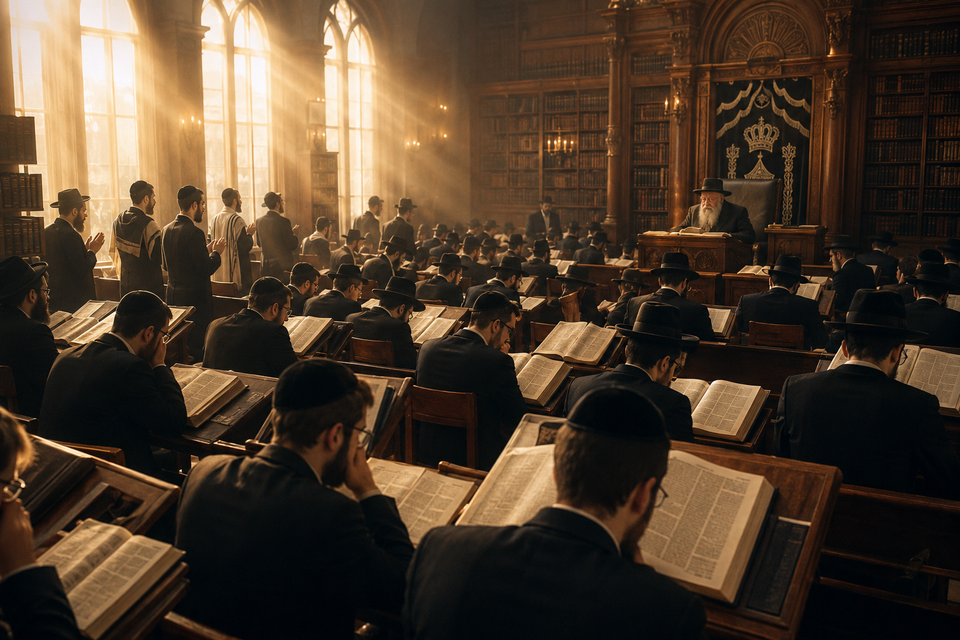
A question hangs over the Torah world in this moment of decrees, arrests, and pressure: how do we actually win? We have no army, no guaranteed leverage, no establishment on our side. And yet the answer is older than any of the forces ranged against us — and it runs in the exact opposite direction from the world's instincts.
Let us say the question plainly, because every bochur and every family is quietly asking it. The judiciary has declared war on the Torah world; the budgets have been cut; bnei yeshiva are being summoned, hunted, and in some cases dragged from their homes in the middle of the night. Against all of that — what is our path to victory? How does a community like ours prevail?
The first thing to understand is that we do not win the way the nations win. "Ein hamelech nosha b'rov chayil" — a king is not saved by the size of his army (Tehillim 33:16). "Lo b'chayil v'lo b'choach, ki im b'ruchi, amar Hashem" — not by might, nor by power, but by My spirit, says Hashem (Zechariah 4:6). We win the way Klal Yisrael has always won, through every exile and every decree that was supposed to be the end of us: through Torah, through tefillah, through loyalty to our gedolim, through sanctifying Hashem's Name rather than, chas v'shalom, the reverse — and through drawing our fellow Jews closer, never further away. Each of these deserves its own word.
I. We Win Through Torah — Because Torah Is What Protects
Not long ago, dozens of Roshei Yeshivos from across Eretz Yisrael — Litvish, Chassidish, and Sephardic together — gathered at the home of HaGaon HaRav Dov Landau, Rosh Yeshivas Slabodka and one of the foremost leaders of the Torah world. They opened, as such gatherings open, by reciting Tehillim. And then Rav Landau set out the entire strategy of the Torah world in a single, quiet sentence: there is no doubt, he said, that every strengthening of limmud Torah will help counter all the decrees.
That is not a morale-boosting metaphor. In the Torah's own understanding, it is the literal mechanism of Jewish survival. The Gemara teaches that Torah is magna umatzla — it shields and it rescues (Sotah 21a). Rav Landau has said it without hedging: it is only in the merit of Torah learning that the enemies surrounding this Land have not risen up to overwhelm it, and the open miracles we have witnessed have no explanation within the natural order at all. The Torah is the medicine that has kept Klal Yisrael alive — and it is precisely that medicine which the decrees are designed to take away.
So here is the most counterintuitive truth of this entire struggle: the avreich bent over his Gemara late into the night is not sitting out the battle. He is fighting it — on the one front that has, in the end, always decided the fate of the Jewish people. This is why, in so difficult a time, Rav Landau called on the avreichim not to retreat into despair but to be mechazeik even more — to learn with greater intensity, not less. The single most powerful thing a Jew can do in the face of a gezeirah against Torah is to learn more Torah. Everything else is commentary.
II. We Win Through Tefillah — And We Gather for Tefillah, Not for Spectacle
When our gedolim call the tzibbur together, it is worth noticing exactly what they call it: an atzeres tefillah — a gathering of prayer. Not a show of force. Not a spectacle for the cameras. A massed assembly of Jews lifting their voices together to the only Address that has ever answered us.
When the decrees intensified, the gedolim called for an enormous atzeres tefillah at the entrance to Yerushalayim — and the Moetzes Gedolei HaTorah of America asked every kehillah and yeshiva across the ocean to recite three kapitlach of Tehillim at the very same hour, so that the voice of Klal Yisrael would rise as one from both sides of the world. That is the Charedi weapon of choice. Not provocation — tefillah.
And there is a small story from this very season that captures the entire spirit of the matter. When a bochur of the Mir — the largest yeshiva in the world — was arrested (he had gone to the recruitment office in Be'er Sheva precisely in order to regularize his status and apply for an exemption, and was taken into custody on the spot), the yeshiva announced an atzeres tefillah on his behalf. But before the gathering could take place, the bochur was released and returned home for Shabbos. And the Mir did something that tells you everything you need to know about the derech of Torah. It canceled the atzeres. It announced the "wonderful news" of his release, and instructed simply that all sedarim and shiurim continue as usual.
There was no protest held for the sake of holding a protest. The instant the purpose was achieved, thousands of bnei Torah were sent straight back to the one place that truly matters — the beis medrash. The gathering had never been about making noise; it had been about tefillah and about a brother in distress. When the brother was freed, the noise was unnecessary — and the learning, which is the whole point, resumed without missing a beat. A community that understands that pulling thousands of Jews away from their Gemaras is itself a loss does not do it lightly, and never does it for show.
III. We Win by Listening to Our Gedolim — Including When They Tell Us What Not to Do
A community prevails when it follows its leaders — and true loyalty means listening to our gedolim in both directions: not only when they tell us what to do, but also when they tell us what not to do.
At that same gathering, Rav Dov Landau addressed the wave of street demonstrations directly and unflinchingly. Protests of a kind we never received from our rabbeim of previous generations, he said, are not our derech. And he named the danger out loud: very often, such demonstrations cause a chillul Hashem, and inflict real damage on the image of the Torah community in the eyes of the world.
This is daas Torah speaking — and it deserves to be heard with particular care precisely because it is the harder message to hear. When a Jew is dragged from his home, the heart cries out to do something, and blocking a highway at two in the morning can feel like doing something. But the gadol hador is telling us, with love and with clarity, that this was not the way of our forefathers, that it is not our derech, and that it frequently produces the very opposite of what we need. We do not measure our response to persecution by how much it relieves our anger. We measure it by what the Torah, through the mouths of our gedolim, actually asks of us. To follow them when they restrain us is every bit as much a part of winning as following them when they mobilize us.
IV. We Win by Being a Kiddush Hashem — Never a Chillul Hashem
This is the deepest principle of all, and it is the other side of the very same coin. The Torah's ultimate demand on a Jew is captured by Chazal in a few words: "she'yehei Shem Shamayim misaheiv al yadcha" — that the Name of Heaven become beloved through you (Yoma 86a). Everything a Jew does is meant to make the Ribbono Shel Olam more beloved in His world. A Jew who learns with diligence, who carries himself with dignity, who meets even persecution with restraint and emunah rather than with rage — that Jew is a walking Kiddush Hashem, and that itself is a power loosed into the world. By the same measure, Chazal count chillul Hashem among the very gravest things a Jew can do.
And Rav Landau drove the point to its summit: the greatest Kiddush Hashem of all, he said, and the highest form of deveikus to Hashem, is complete immersion in limmud Torah — laboring in it, delving into it b'iyun, with depth and with genuine toil. Picture it honestly: tens of thousands of Jews bent over their Gemaras, learning with more fire than ever, precisely because a government has decreed that they should not. That is not only how we protect ourselves. It is how we sanctify His Name in front of the entire world. It is the answer of Chanukah — "l'hashkicham Torasecha," they sought to make us forget Your Torah — and the answer then, as now, was simply to learn it all the more.
V. We Win by Drawing Our Brothers Closer — Not Pushing Them Away
Here is the point we must be most honest with ourselves about, because it is the one most easily lost in the heat of a fight.
We are not at war with other Jews. We are engaged in a struggle to protect the Torah — and the secular brother who today supports the decrees against us is, in the Torah's own understanding, very often a tinok shenishba: a Jew who was simply never given the chance to know what he is missing, raised at a distance from a Torah he was never shown. Hillel HaZaken defined our entire task toward such a Jew in a single, luminous line: be among the talmidim of Aharon HaKohen — "oheiv shalom v'rodef shalom, oheiv es habrios u'mekarvan laTorah" — loving peace, pursuing peace, loving people, and drawing them near to the Torah (Avos 1:12).
Weigh what that means in this moment. Every chillul Hashem, every ugly scene, pushes a distant brother one more step away from the Torah we are aching for him to return to. And every Kiddush Hashem — every display of dignity, of warmth, of unshakeable faith under pressure — draws him one step closer. We can hold our ground without hardening our hearts. We can refuse, absolutely and without compromise, to surrender on our avodas Hashem and on what the medina demands we hand over of our sons — and, at the very same time, refuse to let this struggle turn us cold toward the very Jews we are trying to reach. Those two commitments are not in tension. They are the whole of the assignment. Winning is not merely outlasting a decree. Winning is emerging from it with more of Klal Yisrael drawn toward the Torah than before — not fewer.
VI. What Winning Actually Looks Like
So let us be clear about what victory is, and what it is not. Victory is not a single vote in the Knesset, though we daven with all our hearts for relief. It is not winning a news cycle, or prevailing in a confrontation on some highway. Those are the world's scoreboards, and they are not ours.
Victory is the Torah world emerging from this nisayon stronger than it walked into it: more deeply immersed in learning, more fervent in tefillah, more tightly united behind its gedolim, more careful than ever with the honor of Heaven, and more beloved to the very Jews we are trying to bring home. The decrees themselves will pass, as every decree in our long history has passed — "Netzach Yisrael lo yishaker," the Eternal One of Israel does not deal falsely (Shmuel I 15:29). Empires that were certain they would bury us are themselves long buried, and the Gemara those bochurim are learning tonight is the very same Gemara. The only real question the decrees put to us is this one: what kind of Torah Jews will we choose to be while we outlast them?
VII. The Only Strategy That Has Ever Worked
How do we win? Not by becoming louder, angrier, or more like the world that is pressing in on us. We win by becoming more fully ourselves — more Torah, more tefillah, more loyal to our gedolim, more careful never to desecrate the Name we exist to sanctify, and more loving toward every single Jew we hope to see come home. This is precisely how Klal Yisrael has outlasted every power that ever rose up to erase it. It is not a clever new tactic for a new crisis. It is the oldest strategy there is, and it is the only one that has never once failed.
In the words with which Rav Dov Landau himself concluded: may it be the will of Hashem that He speedily save us from all our troubles, and may we merit the complete redemption — bimheirah b'yameinu, amen.
Sources
The guidance of our gedolim
- The address of HaGaon HaRav Dov Landau, Rosh Yeshivas Slabodka, to the gathering of Roshei Yeshivos at his home — that strengthening limmud Torah counters the decrees, that Torah is what protects Klal Yisrael, that street protests "we did not receive from our rabbeim of previous generations" are not our derech and often cause a chillul Hashem, and that the greatest Kiddush Hashem and highest deveikus is immersion in limmud Torah b'iyun; the Mir Yeshiva's scheduling of an atzeres tefillah for an arrested talmid and its cancellation upon his release, with sedarim and shiurim resuming as usual; the mass atzeres tefillah at the entrance to Yerushalayim and the call of the Moetzes Gedolei HaTorah of America for kehillos worldwide to recite Tehillim in unison
The sources of the derech
- Tehillim 33:16 — ein hamelech nosha b'rov chayil; Zechariah 4:6 — lo b'chayil v'lo b'choach ki im b'ruchi; Sotah 21a — Torah as magna umatzla, that which shields and rescues
- Yoma 86a — she'yehei Shem Shamayim misaheiv al yadcha, the obligation of Kiddush Hashem, and the gravity of chillul Hashem; Avos 1:12 — Hillel's charge to love peace, pursue peace, love people, and draw them near to the Torah; Shmuel I 15:29 — Netzach Yisrael lo yishaker
The structural relationship to other articles in this series
- "How Torah Learning Protects Klal Yisrael" — the mechanism at the heart of this piece
- "Do Charedim Believe in Civil Disobedience?" — the guidance of the gedolim on protest, in depth
- "The Charedi Approach to Kiruv" — drawing every Jew near, even in the middle of a struggle