How does the Dati Leumi (Religious Zionist) world view nationalism?
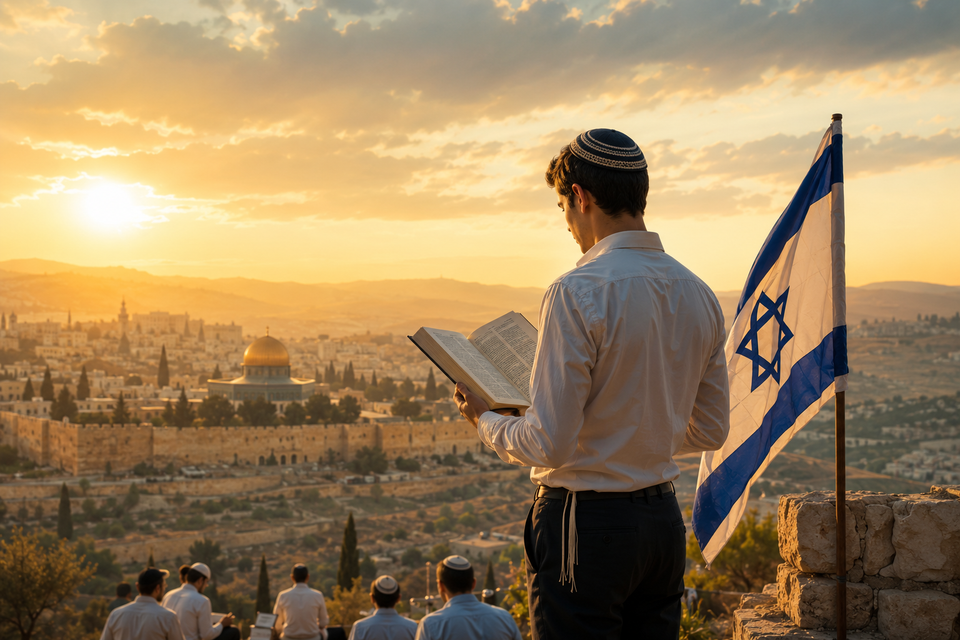
Of all the questions that separate the Charedi and Dati Leumi worlds, none runs deeper than this one: what place does nationalism — the national identity, sovereignty, and statehood of the Jewish people — hold in the hierarchy of Torah values? It is a genuine and serious disagreement between two communities that both love the Torah and both love Klal Yisrael. To understand it honestly, we should first say plainly what nationalism is, then describe how the Religious Zionist world sees it — in its own terms, at its best — and only then explain where the Charedi world, with respect and affection, sees it differently.
I. What Is Nationalism?
Nationalism, in its broadest sense, is the modern idea that a people's national identity and its right to self-determination and sovereignty are a primary focus of loyalty and value — that a nation ought to govern itself, in its own land, under its own flag, and that this is something worth building, defending, and prizing. As a self-conscious movement it rose to dominance in the post-Enlightenment West, reshaping the map of the world over the last two centuries. The question it poses to a Torah Jew is not whether peoplehood matters — of course it does — but how much, and of what kind: where, exactly, the nation and the state sit in a hierarchy of values whose summit is Hashem and His Torah. It is on that question that the two communities answer differently.
II. How the Dati Leumi World Sees It
For much of the Religious Zionist world, the return of the Jewish people to its land and the rebirth of Jewish sovereignty are not merely political achievements. They are events of profound spiritual significance — for many, the very beginning of the redemption, reishit tzmichat geulateinu, the first flowering of a process that will end in the coming of Moshiach.
This worldview was shaped above all by Rav Avraham Yitzchak HaKohen Kook, the first Ashkenazi Chief Rabbi of Eretz Yisrael and one of the most original Jewish thinkers of the modern age. Rav Kook taught a sweeping and luminous vision in which the national reawakening of the Jewish people — including, strikingly, the labor of secular pioneers who had drifted far from observance — was woven into a larger Divine process unfolding toward redemption. He perceived genuine sparks of holiness in the return to the land and the rebuilding of the nation, and believed that the outer, secular shell of the revival was destined in time to be filled and crowned by Torah and kedushah. His son, Rav Tzvi Yehuda Kook, and the yeshiva of Mercaz HaRav moved further with this into a full theology in which the State of Israel itself is understood as the beginning of redemption, and in which settling the land, defending it, and building it up are acts that carry real spiritual weight.
For this world, then, Jewish nationalism rightly understood is not a foreign import at all. It is a sacred return — the reunion of the three strands the Religious Zionist sees as one indivisible whole: Am Yisrael, the people; Eretz Yisrael, the land; and Toras Yisrael, the Torah. To serve in the army, to work the soil, to speak the holy tongue, to build the state — these, in this view, are not merely practical acts but expressions of a holy national rebirth. It is a deeply sincere worldview, grounded by its adherents in the writings of Rav Kook and held by Jews of real Torah commitment, and it deserves to be described faithfully and as they themselves understand it.
III. Where the Charedi World Sees It Differently
The Charedi world honors that sincerity — the Torah these Jews learn, the mitzvos they keep, the mesiras nefesh with which they defend their fellow Jews. And yet, on the hashkafic question itself, it differs, and the difference is real and principled.
It begins from a foundational premise: that Klal Yisrael is simply not a nation in the way the nations of the world are nations. Rav Saadia Gaon stated it with finality — our nation is a nation only by virtue of its Torah. We were not forged into a people by a shared land, a shared language, or a shared sovereignty, the way the nations of the earth were forged; we were born as a people at Har Sinai, at the moment we received the Torah, and our identity is constituted — entirely — by Torah and mitzvos. From this premise flows the Charedi reservation: nationalism as such — national identity, sovereignty, and statehood treated as values in their own right — is not, in the Charedi reading, a Torah value at all. It is a category the Jewish people absorbed from the modern world, however natural it has come to feel, rather than one that grows from the soil of our own mesorah.
IV. Why the Charedi World Calls It a Departure From the Mesorah
This is the heart of the matter, and it cannot be softened into a polite difference of taste. The Charedi world does not hold that reading kedushah into the national revival is simply a second, equally valid path within the Torah. It holds that it is a departure from the Torah's mesorah — a sincere one, held by sincere Jews, but a departure nonetheless. Holiness, in the mesorah we received unbroken from Sinai, comes through one channel: Torah and mitzvos. It cannot be conferred on a flag, an army, a parcel of land, or an act of statehood, however much good those things may do. To treat the national revival as itself holy, or a secular state as the dawn of redemption, is — however deeply it is believed — to read into the Torah a category the Torah never placed there.
The Gedolim of the Charedi world said so with remarkable consistency. Rav Elchonon Wasserman, the Chazon Ish, Rav Shach, Rav Elyashiv, and others — across a spectrum running from Satmar through the Litvishe world to Chacham Ovadia Yosef — taught that holiness reaches this world through Torah alone, and that the language of kedushah cannot be transferred onto national or political achievement. And this was said, with full acknowledgment of Rav Kook's towering greatness in Torah, of his approach itself — not merely of its later and more extreme developments. The Charedi world has held that the approach which finds sanctity in the national revival diverges from the mesorah at its root, a question taken up directly in our article on whether Rav Kook's approach was in line with our mesorah. To name that plainly is not disrespect. It is the refusal to pretend that two genuinely different paths are one.
V. The Line the Charedi World Draws
It is crucial to see how narrow and precise the Charedi objection actually is, because it is so often heard as broader and colder than it is. The objection is not to living in Eretz Yisrael, which the Charedi world treasures as a gift. It is not to the Jews who build the land and risk their lives to defend it, who are our own brothers. It is not even to gratitude for the safety and the good that the State provides, which a Torah Jew should feel.
The objection is to one thing only: the elevation of nationalism itself into a religious value. To treating a flag, an army, or an anthem as objects of kedushah; to declaring that Jewish sovereignty, in and of itself, equals geulah. The Charedi worry is simple and it is sincere: when the national becomes the sacred, something has quietly slipped into a place that belongs to Hashem and His Torah alone. That — not love of the land, which the two worlds fully share — is the line. It is not the building of a state the Charedi world questions. It is the sanctifying of it.
VI. Brothers, Not Enemies
And the disagreement must end where it most belongs — in the recognition that it is a disagreement between brothers. To dissent from an ideology is not to hold its adherents in contempt. Dati Leumi Jews keep the mitzvos, love Klal Yisrael, learn Torah, raise beautiful families, and lay down their lives for other Jews; the Charedi world does not hate them and does not look down on them. On the overwhelming majority of what matters most — emunah, Torah, mitzvos, and the love of every Jew — the two communities stand shoulder to shoulder, and the Charedi world knows it.
So the disagreement is stated honestly, without either pretending it away or dressing it in hatred: the ideology that raises nationalism into a religious value is not a faithful expression of the Torah's order of values but a departure from it. We say this because they are our brothers, not in spite of it — for love that cannot speak the truth is not love. And beneath the disagreement runs a longing: that the day will come when all of Klal Yisrael stands together on the one derech the Torah itself charts — holiness and redemption sought where they have always truly been found, in the Torah and in nothing else. That hope is not a wish to push our brothers away. It is a wish to stand fully beside them and bring them closer.
VII. In Summary
How, then, does the Dati Leumi world view nationalism? In large measure as a sacred return — the national rebirth of the Jewish people as a spiritually charged, even redemptive, reality. And how does the Charedi world answer? With genuine love for the devout Jews who hold that view, and with a conviction it will not soften: that holiness was only ever found in the Torah; that our nationhood was only ever Sinai's; that no flag, however dear, can carry what only the Torah was ever able to carry — and that nationalism raised into a religious value, sincerely as it is held, is simply not the derech the Torah's mesorah charts.
We love every Jew who serves beneath that flag. We hold, simply and without apology, that our deepest loyalty belongs to the One whose kingship no banner could ever represent.
May Hashem unite the hearts of all His children in the love of His Torah, may every Jew come to know the source of true holiness, and may we together merit the redemption we all await — bimheirah b'yameinu, amen.
Sources
The nature of Jewish peoplehood
- Rav Saadia Gaon (Emunot v'Deot) — that our nation is a nation only by virtue of its Torah, born at Sinai rather than forged by land or sovereignty
The Religious Zionist worldview
- The thought of Rav Avraham Yitzchak HaKohen Kook on the spiritual significance of the national revival, and its development by Rav Tzvi Yehuda Kook and the yeshiva of Mercaz HaRav into the doctrine of the State as reishit tzmichat geulateinu, the beginning of the redemption
The Charedi response
- The consistent position of the Gedolim — Rav Elchonon Wasserman, the Chazon Ish, Rav Shach, Rav Yosef Shalom Elyashiv, the Satmar Rebbe, and Chacham Ovadia Yosef — that holiness comes through Torah and mitzvos, that nationalism as such is not a Torah value, and that a secular state is not in itself a redemptive or holy event
The structural relationship to other articles in this series
- "The Difference Between Charedim and Religious Zionists in Hashkafa" — the broader divide of which this is one part
- "Was Rav Kook's Approach in Line with Our Mesorah?" — the figure at the center of this question
- "Why Don't Charedim View the State as Reishit Tzmichat Geulateinu?" — the specific claim examined directly
- "To Our Dati Leumi Brothers: Stand With Us" — the relationship beneath the disagreement