
Why Does Chabad Get Its Own Post?
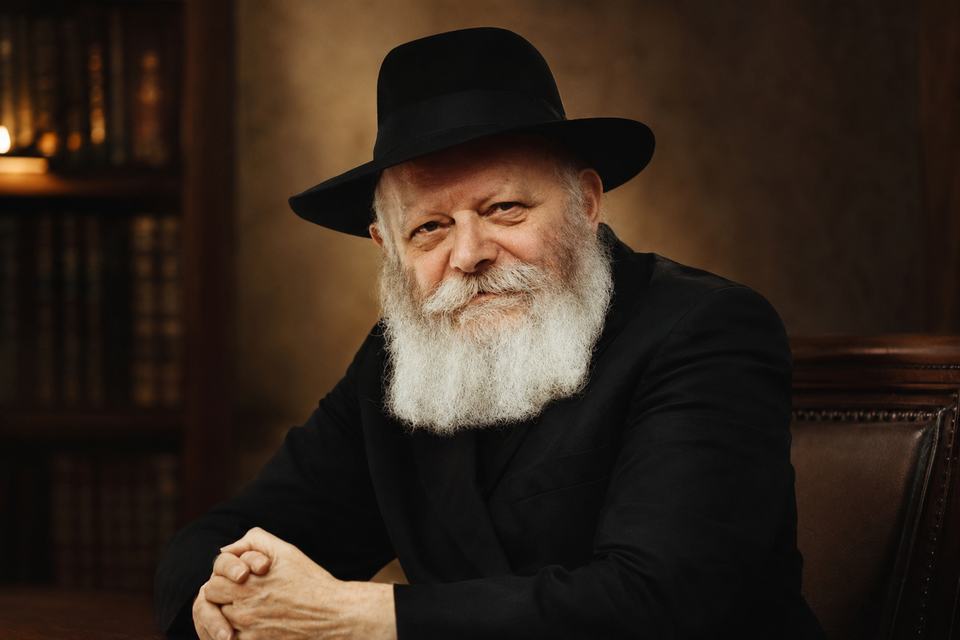
Because when it comes to kiruv rechokim — drawing distant Jews back toward their Father in Heaven — Chabad is not merely one participant among many. Chabad is built on it. Other groups engage in kiruv; Chabad embodies it. And honoring that, openly and without reservation, is itself an act of ahavas Yisrael.
There is a Torah obligation called hoda'as ha'emes — to acknowledge the truth wherever it stands. And the truth is that no movement in the modern Jewish world has poured itself out for the lost Jew the way Chabad has.
I. The Rebbe's Vision: No Jew Left Behind
The Lubavitcher Rebbe, Rabbi Menachem Mendel Schneerson zt"l, was not the founder of Chabad — that was the Alter Rebbe, Rabbi Schneur Zalman of Liadi, more than two centuries ago, who built an entire path of avodas Hashem on Chochmah, Binah, and Daas. What the seventh Rebbe did, from the 1950s until his passing in 1994, was take that inheritance and turn it into a worldwide spiritual force, sending young couples out to every corner of the earth — not, as he saw it, to build a movement, but to bring Yidden home.
To the Rebbe there were no "irreligious Jews." There were only Jews who had not yet been reached. He taught, again and again, that within every single Jew burns a pintele Yid — an indestructible spark — that can never be extinguished and needs only to be awakened; and that the task of the shliach is not to manufacture that flame but to act as a lamplighter, kindling a fire that was already waiting inside the soul. This was not poetry. It was a precise expression of one of the deepest truths in Shas: Yisrael, af al pi shechata, Yisrael hu — a Jew, even when he has sinned, remains entirely a Jew (Sanhedrin 44a). It is the same truth the Alter Rebbe built into the Tanya: that an undimmable Godly soul lives within every Jew, no matter how far he has wandered or how little he knows. Chabad simply took that belief and acted on it without reservation.
II. Shlichus: A World on Fire
Through Merkos L'Inyonei Chinuch, the movement's educational arm, the Rebbe built something the Jewish world had never seen: a global network of shluchim — couples who give their entire lives to establishing Torah outposts in places that have no other Torah infrastructure at all. By Chabad's own reckoning there are today more than six thousand shliach families serving in over a hundred countries, running thousands of Chabad Houses, schools, mikvaos, campus centers, soup kitchens, summer camps, and shiurim.
The reach is almost difficult to believe. From Alaska to Zambia, from Nepal to Siberia, from India to New Zealand — wherever a Jew might wander, a Chabad family is likely already there, waiting with a hot meal and a warm word. On hundreds of university campuses across the world, Chabad is frequently the only Orthodox presence a student will ever encounter, offering something rare: warmth without judgment, Torah without compromise, community without pressure. And none of it is a posting of a few years. It is for life. Shluchim raise their children in these places, build their homes there, and surrender comfort and kavod alike for a single purpose — to ignite a neshama.
III. What It Costs
To grasp what that means, picture the reality behind the statistic: a young couple, newly married, moving to a town with no kosher food, no mikvah, no minyan, no community of any kind, to serve Jews many of whom have never in their lives met an observant Jew. They arrive, and they do not ask the visitor who he is or how he lives before they invite him in. A Jew who has never once put on tefillin wraps the straps for the first time because a Chabad bochur crossed an ocean to reach him on the chance that he might. Whatever name one wants to give it, this is ahavas Yisrael lived as an entire life rather than spoken as a slogan — mesirus nefesh in the most literal sense, the giving over of one's own comfort, ambition, and ease for the sake of another Jew's soul.
IV. Honored Across the Torah World
Admiration for Chabad's mesirus nefesh and ahavas Yisrael reaches across the entire Torah world, voiced by serious people in every camp. When shluchim from across Asia gathered not long ago, Rabbi Shlomo Amar — a former Sephardic Chief Rabbi of Israel — paid them open tribute, praising them for turning spiritual deserts into oases of Torah life, for raising mikvaos and schools and kosher kitchens in places where there had been almost nothing at all. Theirs is a greatness that draws honor from everyone who witnesses it.
V. Why It Gets Its Own Post
So Chabad receives its own space here — not because the movement is perfect, for no group is, but because there are things that must be honored precisely because they are true.
Chabad lives with mesirus nefesh. Chabad does not merely talk about outreach — it crosses oceans for it. Chabad does not only light Shabbos candles — it lights up souls. And above all, Chabad reaches Jews whom no one else is reaching: the Jew in the remote town, the soldier far from home, the student who would otherwise never have met Yiddishkeit at all. To write about kiruv and ahavas Yisrael and leave Chabad out would not only be incomplete. It would be dishonest.
VI. The Revolution of Ahavas Yisrael
At the center of everything the Rebbe taught stood a single pasuk: v'ahavta l're'acha kamocha (Vayikra 19:18) — love your fellow Jew as yourself — which the great teachers of Israel have always called a foundation upon which the whole Torah rests. The Rebbe believed that a single candle lit with truth carries its light farther than anyone can imagine, and he spent his life proving it. Chazal teach that one who saves a single Jewish soul is regarded as having saved an entire world (Sanhedrin 37a); by that measure, Chabad has saved more worlds than anyone could count.
May we all learn from their example — to look at every Jew, however distant, and see a brother carrying a spark that needs only to be awakened. And may the zechus of all that ahavas Yisrael stand as a protection over the whole of Klal Yisrael.
May the day come speedily when every lamp is kindled, every distant Jew is gathered home, and the love between one Jew and another lights the way to the Geulah — bimheirah b'yameinu, amen.
Sources
The vision of every Jew
- Sanhedrin 44a — Yisrael, af al pi shechata, Yisrael hu, a Jew remains a Jew even when he has sinned — the foundation of the pintele Yid
- The Tanya of the Alter Rebbe, Rabbi Schneur Zalman of Liadi — the indestructible Godly soul within every Jew
- The documented vision of the Lubavitcher Rebbe, Rabbi Menachem Mendel Schneerson — that there are no unreachable Jews, only Jews not yet reached, and that the shliach is a lamplighter kindling a flame already present in the soul
The shlichus enterprise
- Merkos L'Inyonei Chinuch and Chabad's own published figures — more than six thousand shliach families in over one hundred countries, operating thousands of institutions worldwide, including hundreds of campus centers
- The tribute of Rabbi Shlomo Amar, former Sephardic Chief Rabbi of Israel, to the shluchim for building Torah life where there had been almost nothing
The Torah of ahavas Yisrael
- Vayikra 19:18 — v'ahavta l're'acha kamocha, love your fellow as yourself
- Sanhedrin 37a — that one who saves a single Jewish soul is as one who has saved an entire world
The structural relationship to other articles in this series
- "The Charedi Approach to Kiruv" — the broader avodah of which this is a singular example
- "Sinas Chinam and Ahavas Yisrael" and "Why Is Unity So Important in Torah Judaism?" — the love across communal lines that this tribute expresses