
Why Do Extremists Throw Rocks at Cars on Shabbos and Scream “Shabbos!”?
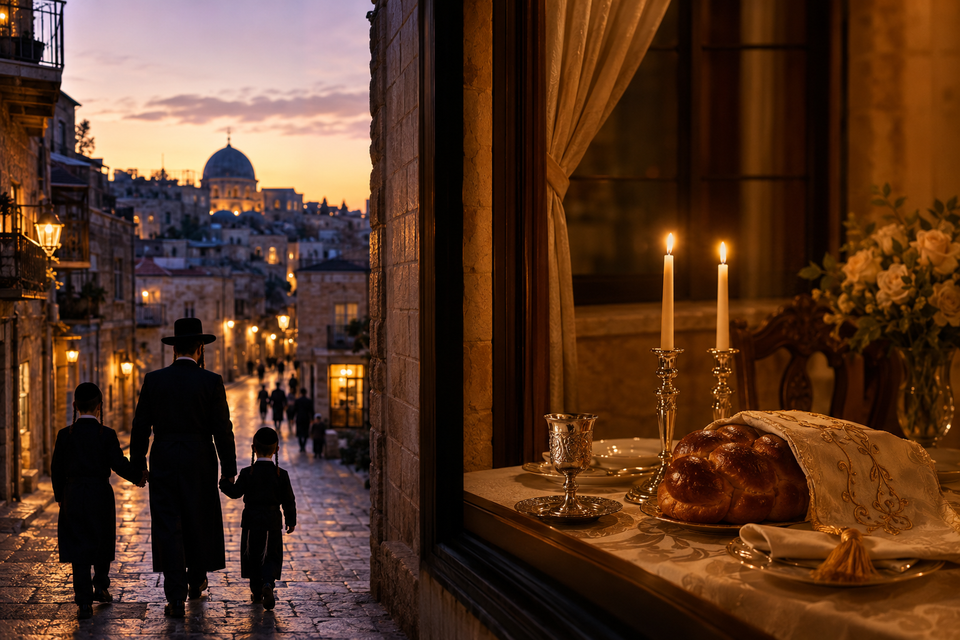
This question reaches into one of the most painful misconceptions about Charedim. When a secular Jew drives through a neighborhood like Meah Shearim on Shabbos and a rock strikes his car, or a voice screams "Shabbos!" at him through the window, it leaves more than a fright — it leaves a wound, and an impression that spreads from that one moment to religious Jews as a whole. So let the most important thing be said first, with no hedging whatsoever: the Torah forbids violence. It forbids endangering a life. It forbids chillul Hashem, and it forbids shaming or harming a fellow Jew. Throwing a rock at a car is wrong — gravely wrong — full stop. With that fixed in place, the rest can be understood honestly: who does this, why, how rare it truly is, and what the Torah actually demands instead.
I. First, the Gravest Point: This Endangers a Life
Before anything else, it must be named for what it is. Throwing a rock at a moving car is not a "protest." A rock through a windshield can kill — the driver, a passenger, a child asleep in the back seat. It is, in plain and unsoftened terms, an act that endangers human life. And here the Torah's own verdict falls with crushing clarity. The Torah commands us to desecrate Shabbos itself in order to save a single life: pikuach nefesh pushes Shabbos aside, for the mitzvos were given that a Jew "shall live by them" — and not die by them (Yoma 85b). The Torah, in other words, values the life of that driver more than it values the very Shabbos the rock-thrower imagines he is defending.
Absorb what that means. The act does not merely fail to protect Shabbos. It inverts the Torah's own order of values — placing in mortal danger the one thing, a Jewish life, for whose sake the Torah would have commanded him to break Shabbos in the first place. There is no reading of this in which it is a mitzvah. At its worst it is among the gravest sins in the Torah, dressed up in the costume of piety.
II. How Rare It Actually Is
With that established, the scale deserves honesty too. Rock-throwing on Shabbos was more common decades ago; today it is genuinely rare, confined to a tiny fringe of individuals in a few isolated pockets — parts of Meah Shearim, certain corners of Beit Shemesh. In the overwhelming majority of Charedi neighborhoods — Bnei Brak, most of Yerushalayim, Modi'in Illit and the rest — it simply does not happen. The average Charedi has never thrown anything at anyone, would be horrified at the thought, and is quietly mortified that the actions of a handful are pinned on more than a million people. But a single rock from a single teenager makes a video clip; a million peaceful Shabbos tables make none.
III. Why Do They Scream "Shabbos!"?
The shouting is a separate matter, and it deserves a more careful word than the rock does. The impulse behind it can be entirely sincere: a Jew who feels genuine anguish at the public desecration of the holiest day of the week, crying out from a place of real kavod Shamayim. That pain, in itself, is not wrong. But how a person carries that pain is everything. The Torah describes its own character as the measure: "deracheha darchei noam, v'chol nesivoseha shalom" — her ways are ways of pleasantness, and all her paths are peace (Mishlei 3:17). Shabbos above all is the day of shalom. To scream at a fellow Jew, to frighten him, to fill him with the conviction that Torah means rage directed at him personally — that betrays the very thing the screamer claims to be defending. A private cry of pain is one thing. Hurling that pain at another Jew like a stone is something else entirely.
IV. Do They Think It Helps? It Doesn't — and the Torah Says So
Most of those who shout or throw are not leaders or thinkers. They are often young, emotionally raw, sometimes poorly guided, raised in insular corners of the world and genuinely convinced they are standing up for Hashem's honor. But conviction is not a license, and sincerity is not a kashrus certificate. The halacha is explicit that "protest" which generates more sin rather than less is no mitzvah at all. Chazal teach mutav sheyihyu shogegin v'al yihyu mezidin — better that a Jew transgress without realizing it than that he be provoked into transgressing in open defiance (Beitzah 30a). The rock and the scream accomplish exactly the forbidden thing: they take a Jew who was driving without a second thought and hand him a lifelong reason to despise the Torah and the people who keep it. As Rav Shlomo Zalman Auerbach taught, shouting that drives a Jew further from Shabbos is not a mitzvah — it is an aveirah.
V. It Violates the Very Mitzvah It Claims to Fulfill
There is a deeper irony still. These zealots imagine they are performing the mitzvah of tochacha, of rebuke. But the Torah's command of "hocheiach tochiach es amisecha" (Vayikra 19:17) arrives wrapped in strict conditions: rebuke must be given with love, in a manner the listener can actually absorb, and never in a way that shames or humiliates him. And Chazal place public humiliation of a fellow Jew among the gravest of all sins — one who whitens another's face in public, they teach, is likened to one who sheds blood (Bava Metzia 58b). So the man who screams at a driver and humiliates him in the open street has not fulfilled the mitzvah of rebuke. He has trampled it, and committed a fresh and serious aveirah on top of the first. You cannot defend the Torah by violating it.
VI. What the Gedolim Actually Say
And the Torah leadership has said all of this, with one voice, in speech and in writing. Rav Yosef Shalom Elyashiv ruled plainly that violence in the name of Shabbos is forbidden and is itself a chillul Hashem. Rav Chaim Kanievsky was pained by every such report and insisted that protest, where warranted at all, be wholly peaceful. Rav Aharon Leib Shteinman framed the indictment most sharply of all: these people imagine they are defending Shabbos, when in plain truth they are driving Jews away from it. Even the most fervently anti-Zionist Charedi bodies, which reject the State's institutions entirely, have condemned the violence and labored to restrain their own fringe. There is no Gadol, anywhere, in any camp, who blesses the rock.
VII. The Torah Way: Tears, Not Rocks — Love, Not Noise
So what does the Torah ask of a Jew who is genuinely pained by chillul Shabbos? The answer is written into the lives of our very greatest. The Chofetz Chaim, it is told, would weep at the sight of a Jew desecrating Shabbos — and never once raised his voice. The Chazon Ish set down the defining principle for our entire era: the non-observant Jew of today is, in the overwhelming majority of cases, a tinok shenishba — a child carried off and raised never having been taught what Shabbos even is — and such a Jew is not to be pushed away but drawn near, in his words, b'avosos ahavah, with cords of love. Rav Moshe Feinstein taught that same patient, loving outreach. And the truth that every true ben Torah carries in his bones is simple: a warm Shabbos table has brought more Jews home than a thousand rocks ever could — and a thousand rocks have never once brought home even a single Jew.
VIII. What Charedim Actually Do About It
This is the part the cameras never trouble to film. The real Charedi response to chillul Shabbos today is not the rock; it is the outstretched hand. It is the Shabbos campaigns in secular neighborhoods, the warm invitations to a Friday-night table, the vast kiruv networks gently showing Jews the beauty of a day they were never given the chance to know. The ordinary Charedi understands, instinctively, what the fringe never learned: that violence repels and love draws near. That is the Torah way. And it is the true Charedi way.
IX. In Summary
So why do a handful throw rocks and scream in the street? Out of a zeal that has lost its way entirely — misdirected, untaught, and flatly condemned by the very Torah it claims to be serving. The rock is not Charedi Judaism. It is its failure: disowned by every Gadol who has ever spoken on it, and mourned by the community it embarrasses. The real face of the Charedi response to Shabbos is the one the cameras always miss — a Jew weeping quietly for his brother, and setting another place at his table. Shabbos was given to us as a gift of peace. The only way to defend it is to live it that way.
May Hashem's holy Shabbos be a source of peace and light for all of Klal Yisrael, may every Jew come to taste its sweetness, and may we draw one another close with cords of love — bimheirah b'yameinu, amen.
Sources
The Torah's prohibition of this conduct
- The principle that pikuach nefesh, the saving of a life, overrides Shabbos itself — "v'chai bahem," that one shall live by the mitzvos (Yoma 85b) — so that endangering a life inverts the Torah's own order of values
- Mishlei 3:17 — deracheha darchei noam, that the Torah's ways are pleasantness and all its paths peace
- Beitzah 30a — mutav sheyihyu shogegin, that it is better a Jew sin unknowingly than be provoked into defiant sin; Vayikra 19:17 — the mitzvah of tochacha and its conditions; Bava Metzia 58b — that publicly shaming a fellow Jew is likened to bloodshed
The Torah's true response
- The Chazon Ish — that the non-observant Jew of today is largely a tinok shenishba, to be drawn close with cords of love rather than pushed away; and the patient, loving outreach taught by Rav Moshe Feinstein
- The rulings of Rav Elyashiv, Rav Chaim Kanievsky, and Rav Aharon Leib Shteinman against all such violence
The structural relationship to other articles in this series
- "The Charedi View on Vandalism" and "The Charedi View on Extremism" — the substance of the rejection
- "Why Does the General Public See These Extremists on the News So Often?" — how a fringe comes to define a community
- "The Charedi Approach to Kiruv" — the loving outreach that is the real answer