
What Is the Torah’s View on Mocking Charedim and The Gedolim?
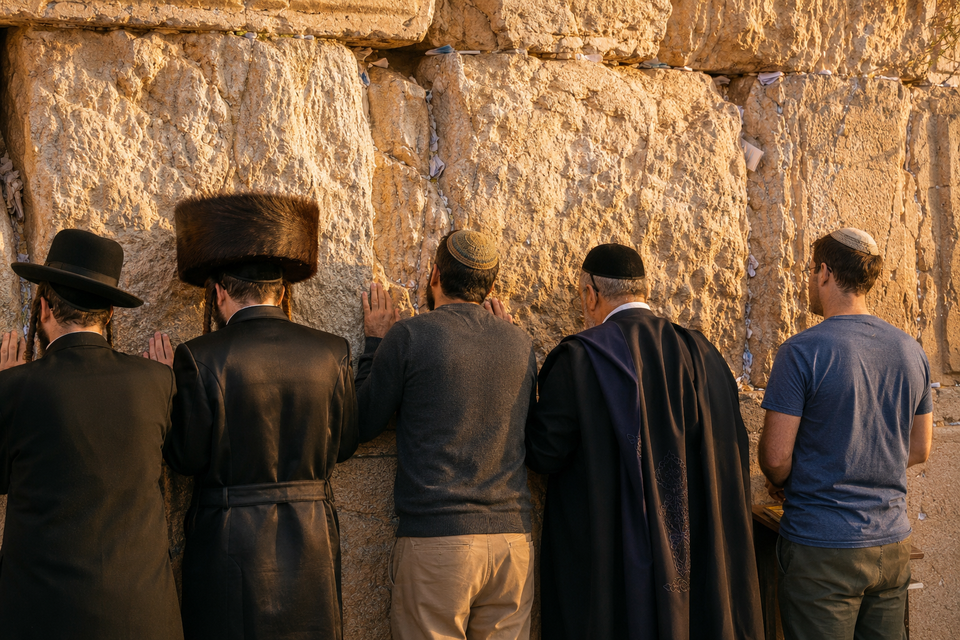
To mock our Gedolim — or to sneer at the Jews who live faithfully by the mesorah — is not "criticism," "debate," or "accountability," however it dresses itself up. It is a violation of some of the Torah's gravest issurim, from the public shaming the Gemara likens to bloodshed to the disgrace of talmidei chachamim. And toward the Gedolei Yisrael it offends a further principle still: emunas chachamim — for one does not sit in judgment of those who stand on a level of Torah he cannot begin to measure.
What is the Torah's view on mocking Charedim and the Gedolim?
To answer it honestly, we first have to clear away a confusion that the mockers themselves rely on — the pretense that what they are doing is "criticism," "debate," or "holding people accountable." It is not, and naming it correctly is the beginning of the answer.
This article is about a specific and growing phenomenon: those with little Torah knowledge or none at all — who do not live by the mesorah and do not submit to its authority — who nonetheless feel entitled to openly mock, disrespect, and degrade our Gedolim and the Jews who faithfully keep the Torah. That is not "criticism," and it is not honest debate. It is mockery, dehumanization, and public shaming — reducing fellow Jews to "parasites" and "leeches," holding Gedolei Yisrael up to ridicule before audiences of thousands, degrading those who have given their lives to Torah. It is a violation of some of the most severe issurim in the Torah, and — as we will see — toward the Gedolim it offends a further principle still: that those who do not stand on their level have no standing to judge them at all. We work through it below.
I. This Is Not "Criticism" — and Naming It Matters
The mockers cloak themselves in the language of legitimate discourse — "we're just criticizing," "it's an open debate," "we're holding them accountable" — and the first task is to strip away that disguise, because it is doing a great deal of dishonest work.
Genuine machlokes and critique within the Torah world have prerequisites. They are the province of those who know the Torah, who are bound by it, who argue from inside the mesorah and in fidelity to it — bnei Torah and talmidei chachamim engaging one another's positions with knowledge and with submission to the same Torah. A person who has little or no Torah, who does not live by the mesorah and does not accept its authority, is not a participant in that discourse at all. When such a person mocks a Gadol or sneers at the Charedi way of life, he is not offering "criticism" that happens to be sharp; he is doing something for which he has neither the knowledge nor the standing — like a man who never studied medicine ridiculing the diagnosis of a master physician, except that here the gap is one of Torah and of a lifetime of avodah that he has not even begun to traverse.
This is the dishonesty at the heart of the mockery: it borrows the respectability of "debate" while lacking everything that makes debate legitimate. It is not engagement between those equipped to disagree; it is degradation aimed by those without standing at those they are in no position to judge. And whatever name it dresses itself in, the Torah sees it for what it is — and treats it as a violation of some of its gravest prohibitions, to which we now turn.
II. Public Humiliation Is a Form of Bloodshed
The first and gravest issur that public mockery violates is the prohibition against shaming another person in public — and the Gemara does not treat this as a minor matter of manners.
"Hamalbin pnei chaveiro b'rabbim" — one who whitens the face of his fellow in public (causing the blood to drain from his face in shame) — the Gemara teaches, is as one who sheds blood (Bava Metzia 58b). Public humiliation is classed, in the Torah's accounting, among the gravest sins, because it destroys something irreplaceable: a person's dignity, his standing, his face before others. The Gemara goes further still, teaching that it is better for a person to throw himself into a fiery furnace than to shame his fellow in public — a measure of just how severe the Torah considers this violation to be.
This is a species of the broader prohibition of ona'as devarim — wronging another person with words. The Torah commands "v'lo sonu ish es amiso" — "you shall not wrong one another" (Vayikra 25:17) — which Chazal apply specifically to verbal mistreatment, teaching that wronging a person with words is in certain respects graver than wronging him in money, because words wound the person himself and cannot be repaid (Bava Metzia 58b). Mockery is ona'as devarim in its purest form — words deployed not to engage but to wound and degrade.
And the modern dimension makes it worse, not better. When mockery is broadcast online — to hundreds of thousands, permanently, where the mocked person has no ability to respond — the public humiliation is multiplied beyond anything the Gemara's generation could have imagined. A single contemptuous post or video can shame a person, or an entire community, before a vast audience in minutes, and the shame lives on indefinitely. The issur of malbin panim b'rabbim was severe when "the public" meant the people in the beis medrash; broadcast to the world and preserved forever, the same sin is magnified enormously.
III. The Special Danger of Dehumanizing Language
There is a particular form of mockery that deserves its own warning, because it is both especially common and especially dangerous: the reduction of fellow Jews to vermin — "parasites," "leeches," "bloodsuckers."
This is not ordinary insult. Dehumanizing language — language that casts human beings as pests or parasites — is among the most dangerous rhetoric there is, precisely because it strips its targets of their humanity and thereby licenses treating them as less than human. The Jewish people, of all peoples, know where the language of "parasites" and "vermin" leads, having been its target in the darkest chapters of our history. That such language is now turned by Jews against other Jews is a tragedy that should stop every one of us cold.
The Torah's foundation here is the dignity of every human being as created b'tzelem Elokim — in the image of God. "Chaviv adam shenivra b'tzelem" — beloved is man, for he was created in the image (Avos 3:14); and the Torah grounds the gravity of bloodshed itself in the fact that man is made in God's image (Bereishis 9:6). To reduce a fellow Jew — and above all a Jew who has given his life to Torah — to a parasite is to deny the tzelem Elokim within him, to deface the image of God. The moment one reaches for the language of vermin, one has abandoned any pretense of "criticism" and entered something the Torah regards with horror.
IV. The Special Gravity of Disgracing Talmidei Chachamim
Beyond the universal prohibitions that protect every Jew, the Torah attaches a special gravity to the disgracing of genuine talmidei chachamim — those who have devoted their lives to Torah — and this bears directly on the mockery of Gedolim and Rabbanim.
The Gemara teaches that the disgrace of talmidei chachamim is a wound that does not heal — "kol hamevazeh talmidei chachamim ein refuah l'makaso" (Shabbos 119b) — and, in the same passage, that Yerushalayim itself was destroyed because its inhabitants disgraced the talmidei chachamim. The reason the Rishonim give is profound: a talmid chacham is not disgraced as a private individual but as a bearer of the Torah, so that contempt for him is, in a real sense, contempt for the Torah he carries and for the One whose Torah it is. To mock a true Torah scholar is to aim one's mockery, ultimately, past the man and at the Torah itself.
This is why the Torah treats the honor due to genuine Torah leadership with such seriousness. When David HaMelech was pursued by Shaul — a king who sought his life — David still refused to raise his hand against him, saying "al eshlach yadi bimshiach Hashem" — "I will not stretch out my hand against the anointed of Hashem" (Shmuel I 24:7). If David showed such restraint toward a king who was trying to kill him, because of the sanctity of the office he bore, how much more carefully must one guard one's words toward the Gedolei Yisrael, who have given their entire lives to Torah and who guide Klal Yisrael with sacrifice and humility.
V. Why We Do Not Criticize Our Gedolim
Here a foundational principle of Torah Judaism must be stated clearly, because it is widely misunderstood — and because it goes beyond the prohibition of mockery to the question of criticism itself. Within the Torah world, we do not set ourselves up as critics of our Gedolim, because they operate on a level of Torah, of daas, and of yiras Shamayim that we are simply not equipped to assess.
This is the principle of emunas chachamim — faith in the sages — and it is not blind submission or a claim that Gedolim are infallible. It is a recognition of a real and unbridgeable gap. A person who has immersed his entire life in Torah, whose every decision is weighed against the totality of Torah, who has refined his middos and his yiras Shamayim over decades, sees with a clarity that one standing far below him cannot evaluate. For the ordinary Jew to sit in judgment of such a person's Torah decisions is like one who has never studied medicine pronouncing the diagnosis of a master physician mistaken — except that the gap here is greater, because it is a gap not only of knowledge but of the spiritual stature that Torah and a lifetime of avodah confer. We are not on the level to second-guess them, and recognizing that we are not is itself a piece of wisdom.
This does not mean Gedolim never err — they are human, and the mesorah does not claim otherwise. But it means that the ordinary Jew is not the one positioned to identify and pronounce upon those errors, and that the posture of standing in judgment over the Gedolei Yisrael — weighing their decisions and finding them wanting — is itself a failure of emunas chachamim and a distortion of one's place. The Torah's own structure places the interpretation and application of Torah in the hands of those who have mastered it. To the one immersed in Torah belongs the authority; to the rest of us belongs the humility to recognize it.
VI. Gedolim May Disagree — but We Do Not Enter Their Machlokes
A crucial corollary follows, and it dissolves a confusion that critics often exploit. The fact that Gedolim sometimes disagree with one another does not open the door for us to criticize any of them.
Machlokes among Gedolei Yisrael is ancient, legitimate, and woven into the very fabric of Torah — from the disputes of Hillel and Shammai onward, "eilu v'eilu divrei Elokim chayim," these and these are the words of the living God (Eruvin 13b). When one Gadol holds one position and another holds the opposite, this is a machlokes l'shem shamayim between two masters of Torah, each arguing from within the tradition at a level we cannot fathom. It is the legitimate disagreement of giants — and it is theirs, not ours.
The error — and it is one critics make constantly — is to take a disagreement among Gedolim and treat it as a license for the layperson to attack one of them. "This Gadol disagreed with that one, so I may side against him." This does not follow at all. A Gadol who differs with another Gadol does so from his own towering mastery of Torah; the ordinary Jew who seizes on that dispute to disparage one side has not joined a machlokes of giants — he has simply used one Gadol as a stick to beat another, which is precisely what he has no standing to do. We are not participants in the disputes of the Gedolim, and we are not their arbiters. When Gedolim disagree, the proper posture of the ordinary Jew is not to enter the fray and take sides against one of them, but to recognize that two masters of Torah are engaged in a dispute for the sake of Heaven that is above our station to adjudicate. To follow one's own rav and mesorah is right and necessary; to weaponize a machlokes of Gedolim in order to mock or delegitimize one of them is not.
This is the heart of the matter where the Gedolim are concerned. The mockery of Gedolei Yisrael is forbidden not only because it is contempt — though it is that, in its gravest form — but because it presumes a standing the mocker does not possess: the standing to evaluate, judge, and condemn those who operate on a level of Torah he cannot begin to measure. Where the Gedolim are concerned, the issue is not merely "criticism versus contempt"; it is that we are not on the level to be their critics at all.
VII. Lashon Hara and Mockery Cloaked as Righteousness
Mockery rarely travels alone; it usually rides on lashon hara and motzi shem ra — derogatory speech and outright falsehood — and the Torah's prohibitions on these are among its most stringent.
The Torah curses "makeh re'eihu basaser" — one who strikes his fellow in secret (Devarim 27:24) — which Rashi, following Chazal, explains refers to lashon hara: the one who wounds his fellow not with a fist but with words spoken behind his back, all while maintaining a righteous front. This is precisely the posture of so much mockery of the Charedi world — wounds inflicted from a distance, dressed in the language of conscience. The Chofetz Chaim devoted his life to teaching the gravity of these prohibitions; and in our generation, where a distortion or a sneer can reach hundreds of thousands in moments, the potential for lashon hara and motzi shem ra against entire communities has been magnified beyond measure.
And here is the subtlety that makes one common form of this mockery especially insidious: the fact that it is so often done "l'shem shamayim" — to "hold the Charedim accountable," to "improve" them, to "speak truth" — does not make it better. It frequently makes it worse. Because mockery wrapped in self-righteousness carries its own peculiar danger: the conviction that one is doing a mitzvah blocks the path to teshuva. A person who knows he is being cruel may one day regret it; a person convinced his cruelty is a holy service feels no need to repent of it at all. The self-righteous mocker is, in the image Chazal use, like one who immerses in a mikveh while still grasping a dead sheretz in his hand (Taanis 16a) — performing a purification that cannot work, because the source of impurity is still clutched tight. The cloak of righteousness does not sanctify the mockery; it only seals it against repair.
VIII. When a Frum Jew Mocks — Torah Turned Against Torah
There is a painful dimension to add, and it must be stated carefully. When a secular Jew, distant from Torah, mocks the Charedi world, it is a sorrow; but when a person who himself keeps mitzvos and knows the value of Torah turns mockery against Gedolim and bnei Torah, something graver occurs.
The one who knows better cannot claim ignorance. And when he deploys Torah language, Torah arguments, or his own religious standing as instruments of contempt against other Torah Jews, he is, in a sense, turning the Torah into a weapon against the Torah — a corruption that the baalei mussar regarded as among the most spiritually dangerous of all, precisely because it uses what is holy as a tool of degradation. The chilul Hashem, too, is magnified: when one who bears the name of a Torah Jew publicly degrades other Torah Jews, he profanes the very thing he claims to represent, before an audience that learns to associate Torah with contempt.
This is not to say that an observant Jew may never criticize the Charedi world — he may, on the same terms as anyone: through argument, not contempt; engaging positions, not degrading people. It is to say that the one who knows the worth of Torah and the gravity of these issurim bears a heavier responsibility to stay on the right side of the line — and that to cross it, knowingly, using the tools of Torah itself, is a betrayal of a different order than the mockery of one who never knew better.
IX. The Closing Position
So what is the Torah's view on mocking Charedim and the Gedolim?
It begins by stripping away the disguise. What is paraded as "criticism," "debate," or "accountability" — when it comes from those with little or no Torah, who do not live by the mesorah and do not submit to it, and who aim it at the Gedolei Yisrael and at the Jews who faithfully keep the Torah — is none of those things. It is mockery — the public shaming the Gemara likens to bloodshed (Bava Metzia 58b); the ona'as devarim that wounds with words; the dehumanizing language that defaces the tzelem Elokim; the lashon hara that strikes from the shadows; and, with special gravity, the disgracing of genuine talmidei chachamim, which the Gemara calls a wound that does not heal (Shabbos 119b) and which, in our history, brought the churban itself. And toward the Gedolei Yisrael it offends a further principle still: we do not stand in judgment of them at all, for they operate on a level of Torah we cannot measure — and the fact that Gedolim may disagree among themselves gives no outsider license to enter their machlokes or to wield one against another.
The deepest truth beneath all of it is simple. Those who mock are degrading the very bearers of the Torah, and the Jews who give their lives to keep it — defacing the image of God in a fellow Jew, and aiming their contempt, past the man, at the Torah he carries. The Charedi world is built on yeshivos and chesed, on Shabbos and tznius, on quiet tefillah and mesirus nefesh; and its Gedolim have devoted their every hour to the Torah that sustains us all. They are not the property of every passerby with an opinion and a phone, to be judged and ridiculed by those who have never tasted what they have mastered. If a person knew what a single hour of their Torah, or a quiet tefillah from a bubby in Meah Shearim, does for Klal Yisrael — he would not mock. He would fall silent. And he would beg to understand.
May we merit to guard one another's dignity as our own, and through that to hasten the day when contempt gives way to the love that will bring the geulah — bimheirah b'yameinu, amen.
Sources
Mockery is not "criticism" — the question of standing
- Genuine machlokes l'shem shamayim and critique as the province of bnei Torah faithful to the mesorah, steeped in Torah and submitted to its authority — as distinct from the mockery and degradation of the Gedolim and of mesorah-faithful Jews by those with little or no Torah, who do not live by the mesorah and have neither the knowledge nor the standing to judge those they ridicule
Public humiliation as bloodshed; ona'as devarim
- Talmud Bavli, Bava Metzia 58b — "hamalbin pnei chaveiro b'rabbim" is as one who sheds blood; better to throw oneself into a fiery furnace than to shame one's fellow in public; and ona'as devarim (wronging with words) as in certain respects graver than monetary wrong
- Vayikra 25:17 — "v'lo sonu ish es amiso" — the prohibition of wronging one another, applied by Chazal to verbal mistreatment
- The magnification of malbin panim b'rabbim when broadcast online to vast, permanent audiences
The dignity of every Jew — b'tzelem Elokim
- Pirkei Avos 3:14 — "chaviv adam shenivra b'tzelem" — beloved is man, created in the image of God; Bereishis 9:6 — the gravity of bloodshed grounded in man's creation in God's image
- The special danger of dehumanizing language ("parasites," "leeches," "vermin"), which denies the tzelem Elokim — and which Jewish history, above all, knows the consequences of
The special gravity of disgracing talmidei chachamim
- Talmud Bavli, Shabbos 119b — "kol hamevazeh talmidei chachamim ein refuah l'makaso" (the disgrace of a talmid chacham is a wound that does not heal); and that Yerushalayim was destroyed because its inhabitants disgraced the talmidei chachamim
- Shmuel I 24:7 — David's refusal to harm Shaul: "al eshlach yadi bimshiach Hashem" — the restraint due to one bearing a sacred office, a fortiori toward the Gedolei Yisrael devoted to Torah
- The theme (transmitted in the name of Rav Elchonon Wasserman zt"l, Kovetz Maamarim) that contempt for a talmid chacham is ultimately contempt for the Torah and the Shechinah he bears — presented as a documented theme
Emunas chachamim — why we do not criticize our Gedolim
- The principle of emunas chachamim: that the Gedolei Yisrael operate on a level of Torah, daas, and yiras Shamayim that the ordinary Jew is not equipped to assess, so that the ordinary Jew is not in a position to sit in judgment of their Torah decisions — not a claim of infallibility, but a recognition of an unbridgeable gap of mastery and stature (related to the authority of the qualified developed in "What Is the Torah's View on Democracy?")
- Talmud Bavli, Eruvin 13b — "eilu v'eilu divrei Elokim chayim" — the legitimacy of machlokes among the masters of Torah; the corollary that a disagreement among Gedolim is theirs, and gives the ordinary Jew no license to enter it, take sides against one of them, or wield one Gadol against another
Lashon hara and mockery cloaked as righteousness
- Devarim 27:24 — "arur makeh re'eihu basaser" — with Rashi (following Chazal): the one who strikes in secret through lashon hara; the teaching of the Chofetz Chaim on the gravity of lashon hara and motzi shem ra, magnified in the age of social media
- Talmud Bavli, Taanis 16a — "tovel v'sheretz b'yado" — one who immerses while grasping a source of impurity; the self-righteous mocker whose conviction of doing a mitzvah blocks teshuva
When a frum Jew mocks
- The graver chilul Hashem when one who knows the worth of Torah turns mockery against Gedolim and bnei Torah — "Torah turned against Torah" (the theme transmitted in the name of Rav Yitzchok Hutner zt"l, Pachad Yitzchak — presented as a documented theme); the heavier responsibility of the one who knows better; (the original draft's application of the category of mesis u'madiach — the enticer to idolatry — to such critics is an overreach and is not adopted here)
The structural relationship to other articles in this series
- "Sinas Chinam and Ahavas Yisrael" — baseless hatred and the love of every Jew
- "Why Is Unity So Important in Torah Judaism?" — the one body of Klal Yisrael and the dignity of every member
- "Who Benefits More: The Charedim From the State, or the State From the Charedim?" — the response to the "non-contributor" charge (rather than re-argued here)
- "How Does the Charedi World View Secular Jewish Leaders?" — the framework of engaging every Jew with respect