
Is Living in Eretz Yisrael a Mitzvah According to the Torah?
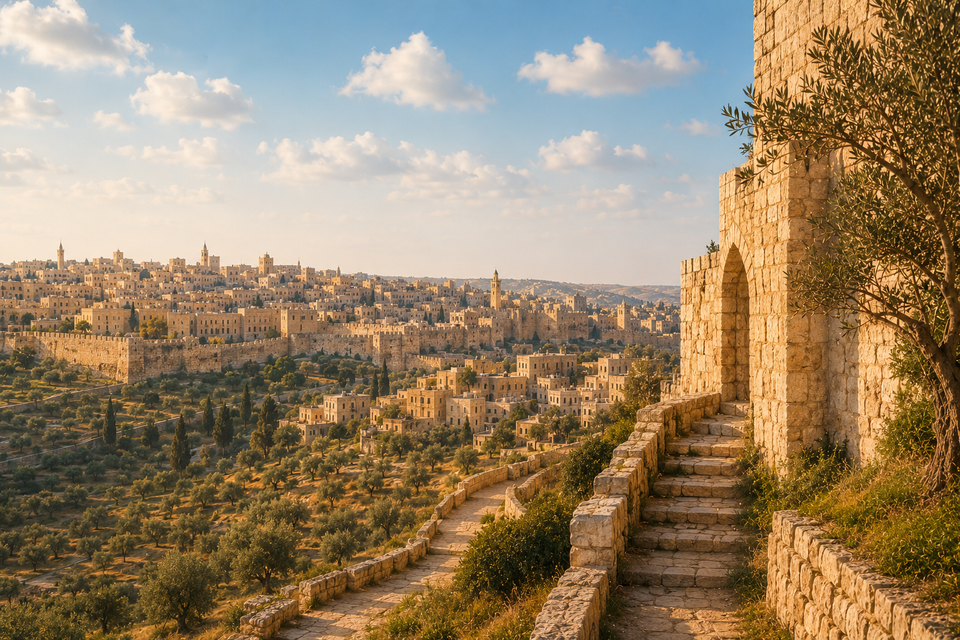
Yes — the Mitzvah of Yishuv Eretz Yisrael Is Real, Eternal, and Cherished by the Charedi World. But the Torah Mitzvah of Living in the Land Must Not Be Confused With the Secular Zionist Project. One Is a Commandment From Sinai; the Other Is a Modern Political Ideology. Loving and Living in Eretz Yisrael Is Torah. Conflating That Love With the Ideology of the Secular State Is the Error This Article Exists to Clarify
Ask any Jew with a yearning soul, and you will hear it: there is something different about Eretz Yisrael. It is more than a country. It is the inheritance Hashem promised to Avraham, Yitzchak, and Yaakov; the place where the Avos walked, where the Beis HaMikdash stood, where the Shechinah dwelt and will dwell again; the land toward which every Jew has turned in tefillah three times a day for two thousand years.
The question is whether this love translates into a mitzvah — an actual commandment of the Torah to live in Eretz Yisrael — and how the Charedi world understands that mitzvah in relation to the secular State that currently governs the Land.
The answer requires two things to be held together with precision. First: yes, living in Eretz Yisrael is a mitzvah — affirmed by the Ramban, the Chasam Sofer, the Chazon Ish, and the broad mainstream of halachic authority, and cherished by the Charedi world, which is overwhelmingly concentrated in Eretz Yisrael and growing there faster than any other Jewish community. Second: the Torah mitzvah of yishuv Eretz Yisrael is categorically distinct from the secular Zionist ideological project — and the conflation of the two is one of the central confusions this series exists to clarify.
We work through both below.
I. The Source: "V'Yishavtem Bah"
The foundational source is Bamidbar 33:53:
"V'horashtem es ha'aretz vi'shavtem bah, ki lachem nasati es ha'aretz lareshes osah."
"And you shall take possession of the Land and dwell in it, for to you I have given the Land to possess it."
On its surface, this could read as a historical instruction to the generation of Yehoshua entering the Land. But the major halachic authorities — led by the Ramban — read it as something far deeper: a mitzvah binding in every generation.
II. The Ramban's Categorical Position
The most important and forceful voice is the Ramban (Rabbi Moshe ben Nachman). In his Hasagos (critical additions) to the Rambam's Sefer HaMitzvos, the Ramban lists yishuv Eretz Yisrael as Positive Commandment #4 among the mitzvos he holds the Rambam wrongly omitted from the count of 613. The Ramban writes:
"She'nitztavinu lareshes ha'aretz asher nasan Hashem… la'avoseinu, l'Avraham l'Yitzchak u'l'Yaakov, v'lo na'azvenah b'yad zulaseinu min ha'umos o la'shemamah."
"We were commanded to take possession of the Land that Hashem gave to our forefathers, to Avraham, to Yitzchak, and to Yaakov; and not to abandon it to other nations, or to leave it desolate."
The Ramban identifies two dimensions of the mitzvah: (1) that the Land be under Jewish sovereignty rather than foreign rule, and (2) that the Land be actively settled rather than left desolate. And critically, the Ramban concludes that the mitzvah applies in every generation, including in exile, and obligates every individual Jew (with the qualification, noted in the Rashbash and other authorities, that individual circumstances may exempt a particular person who is genuinely unable).
The Ramban's position is unequivocal: living in Eretz Yisrael is a full-fledged Torah mitzvah, comparable in its obligatory character to tefillin or Shabbos. This is the foundational source the Charedi world relies upon in affirming the mitzvah of yishuv Eretz Yisrael.
III. The Rambam's Omission — and What It Does and Doesn't Mean
The Rambam (Rabbi Moshe ben Maimon) does not count yishuv Eretz Yisrael among the 613 mitzvos in his Sefer HaMitzvos. This is the most discussed feature of the halachic landscape on this question. But it does not mean the Rambam rejected the value or obligation of living in the Land.
The Rambam in Hilchos Melachim 5:9–12 rules explicitly that "it is forbidden to leave Eretz Yisrael for chutz la'aretz at all times" except for specific permitted reasons (to learn Torah, to marry, or to escape danger, and even then with the intention to return). He rules that "a person should always dwell in Eretz Yisrael, even in a city whose majority is gentiles, and not dwell in chutz la'aretz even in a city whose majority is Jews." He rules that "the great Sages would kiss the borders of Eretz Yisrael and kiss its stones and roll in its dust." These are not the rulings of someone indifferent to living in the Land.
How, then, to understand the omission? The classical positions:
The Megillas Esther (Rabbi Yitzchak di Leon, a commentary defending the Rambam's count against the Ramban's critique) holds that the Rambam considered the mitzvah of yishuv Eretz Yisrael to apply only in the time of the full national framework — the days of Moshe, Yehoshua, and David before the exile, and again in the days of Mashiach — and not as an individually binding mitzvah during the exile. On this reading, the Rambam omitted it because it is not a mitzvah that applies in our current historical period in the individually-obligating sense.
The Avnei Nezer (Rabbi Avraham Borenstein of Sochatchov, Yoreh Deah 454) argues the opposite — that even according to the Rambam there is a biblical obligation to live in Eretz Yisrael today. He points out that the Rambam omits other clear obligations (such as constructing the Aron) from his count for technical reasons of enumeration, not because he denies they are mitzvos. On this reading, the Rambam's omission is a technical feature of his counting methodology, not a substantive denial.
The Charedi world does not need to resolve this dispute definitively, because both readings affirm the value of living in Eretz Yisrael. Even on the Megillas Esther's reading, the Rambam's own rulings in Hilchos Melachim establish the profound value of dwelling in the Land. The dispute is about whether it is counted among the 613 and whether it is individually obligating in exile — not about whether it is a genuine Torah value. On the Torah value of living in Eretz Yisrael, there is no real dispute.
IV. The Talmud: "K'mi She'Yesh Lo Eloka"
The Gemara in Kesubos 110b establishes the profound spiritual dimension of living in the Land:
"L'olam yadur adam b'Eretz Yisrael afilu b'ir she'rubah akum, v'al yadur b'chutz la'aretz v'afilu b'ir she'rubah Yisrael. She'kol ha'dar b'Eretz Yisrael domeh k'mi she'yesh lo Eloka, v'chol ha'dar b'chutz la'aretz domeh k'mi she'ein lo Eloka."
"A person should always dwell in Eretz Yisrael, even in a city whose majority is gentiles, and not dwell in chutz la'aretz, even in a city whose majority is Jews. For anyone who dwells in Eretz Yisrael is like one who has a God, and anyone who dwells in chutz la'aretz is like one who has no God."
These are striking words. The Gemara establishes that the spiritual quality of life in Eretz Yisrael is categorically different from life in exile — to the point that the Gemara prefers dwelling among gentiles in the Land over dwelling among Jews outside it. The Charedi world takes this Gemara with full seriousness. The spiritual value of living in Eretz Yisrael is real, profound, and affirmed by Chazal in the strongest terms.
V. The Documented Charedi Affirmation
Far from rejecting the mitzvah of yishuv Eretz Yisrael, the Charedi world has affirmed and lived it across the modern period.
The Chasam Sofer (Rabbi Moshe Sofer, 1762–1839), in his responsa (Yoreh Deah 234), wrote that "there is no doubt that in our time there is a great mitzvah to dwell in Eretz Yisrael" — and explicitly argued that even according to the Rambam (who did not count it among the 613), the mitzvah of living in the Land remains operative. The Chasam Sofer, the foundational opponent of Reform and the architect of the "Chodosh assur min haTorah" framework, was simultaneously a powerful affirmer of the mitzvah of yishuv Eretz Yisrael.
The Chazon Ish (Rabbi Avraham Yeshaya Karelitz, 1878–1953), who himself made aliyah to Bnei Brak and built the post-war Lithuanian Charedi world in Eretz Yisrael, ruled that "the mitzvah of settling Eretz Yisrael applies even in the present time." The Chazon Ish's entire life's work — the rebuilding of the Lithuanian Torah world specifically in Eretz Yisrael — was an embodiment of the affirmation of this mitzvah.
The Vilna Gaon (1720–1797), who attempted to make aliyah himself and whose talmidim founded the original Ashkenazi Charedi settlement of Yerushalayim and Tzfas in the early 1800s (the Perushim), regarded the settlement of Eretz Yisrael as a matter of the highest spiritual significance, connected in his framework to the unfolding of the geulah.
The historical Charedi presence in Eretz Yisrael — the Yishuv HaYashan (Old Yishuv) — predates secular Zionism by centuries. Charedi communities in Yerushalayim, Tzfas, Tiveriya, and Chevron maintained continuous Jewish settlement in the Land throughout the centuries before the rise of the Zionist movement. The Charedim were living the mitzvah of yishuv Eretz Yisrael long before political Zionism existed.
The contemporary reality is the strongest testament. The Charedi world is overwhelmingly concentrated in Eretz Yisrael. Bnei Brak, Yerushalayim's Charedi neighborhoods, Beitar Illit, Modi'in Illit, Elad, Beit Shemesh — these are among the most densely Jewish places on earth, populated by Jews who chose to live in the Land and raise their families there. The Charedi community is not absent from Eretz Yisrael. It is, demographically, the fastest-growing Jewish population in the Land, projected to reach 22–24% of Israel's population by 2050. The Charedim are living the mitzvah of yishuv Eretz Yisrael at a scale unmatched by any other community.
VI. The Critical Distinction: The Mitzvah Is Not the Ideology
Here is the essential clarification that this entire article exists to make. The mitzvah of yishuv Eretz Yisrael — living in the Land — is categorically distinct from the secular Zionist ideological project. The Charedi world affirms the first and rejects the second, and the conflation of the two is the source of enormous confusion.
Loving Eretz Yisrael is Torah. Living in Eretz Yisrael is a mitzvah. Settling the Land, raising families in it, building Torah institutions in it, kissing its stones and rolling in its dust as the great Sages did — all of this is the fulfillment of an authentic Torah mitzvah that the Charedi world cherishes and lives.
Secular Zionism is something else entirely. Secular Zionism is a modern political ideology, founded by figures who were largely non-observant and in many cases explicitly anti-religious, which holds that the Jewish people are fundamentally a nation like other nations, that Jewish identity is essentially ethnic-national rather than covenantal, that the Jewish problem is solved through political sovereignty achieved by human initiative, and that the secular State is itself the realization of Jewish destiny. This ideology is not the mitzvah of yishuv Eretz Yisrael. It is a competing framework that uses the Land as its object while rejecting the Torah framework that makes the Land holy in the first place.
The distinction is precise:
- The Torah Jew lives in Eretz Yisrael because Hashem commanded it and because the Land is holy — the fulfillment of a mitzvah within the framework of avodas Hashem.
- The secular Zionist lives in Eretz Yisrael because he believes the Jewish people need a national homeland like every other nation — a framework rooted in modern nationalism rather than in Torah.
Both may physically reside in the same land. But the frameworks are categorically different, and the Charedi world embraces one while rejecting the other. This is the same Source-vs-vessel distinction we have developed across this series: the Land is holy, the mitzvah of living in it is real, the miracles unfolding in it are from Hashem — but the secular ideological framework that claims the Land as its own achievement is not the framework of Torah, and the Torah Jew does not adopt it even while living in the Land and loving it with his whole heart.
VII. The Boundary: The Three Oaths and the Question of Sovereignty
The Ramban's mitzvah includes a dimension of Jewish sovereignty over the Land — that it not be "abandoned to other nations." This raises the question that the Charedi world takes seriously: what is the relationship between the mitzvah of yishuv Eretz Yisrael and the halachic framework of the Three Oaths (Kesubos 111a)?
We have addressed the Three Oaths in detail in a dedicated article in this series. In brief: the Gemara in Kesubos 111a records three oaths that the Jewish people and the nations were bound by at the time of the exile — that the Jewish people would not "ascend as a wall" (mass forced return through human-engineered political-military means before the time), that they would not rebel against the nations, and that the nations would not oppress the Jewish people excessively. The Satmar Rav's Vayoel Moshe develops the framework that secular Zionism's mode of establishing Jewish sovereignty — through political-military human initiative ahead of the geulah — runs into the prohibition of the oaths.
The crucial point for this article: the Three Oaths framework does not contradict the mitzvah of yishuv Eretz Yisrael. The two operate together. Living in the Land, settling it, building Torah communities in it, loving it — these are mitzvos that the Charedi world fully affirms and lives. What the Three Oaths framework addresses is specifically the mode of achieving Jewish national sovereignty — the question of whether human-engineered political-military sovereignty ahead of the geulah is consistent with the halachic framework Chazal established. One can fulfill the mitzvah of living in Eretz Yisrael in full while maintaining the theological position that the secular State's mode of establishing sovereignty is halachically and hashkafically problematic. The Charedim of the Old Yishuv did exactly this for centuries — living the mitzvah of yishuv Eretz Yisrael without endorsing the secular nationalist project.
VIII. So — Is It a Mitzvah?
Yes. According to the Ramban, the Chasam Sofer, the Chazon Ish, the Vilna Gaon's framework, and the broad mainstream of halachic authority, living in Eretz Yisrael is a Torah mitzvah of profound spiritual weight. Even the authorities who follow the Rambam's omission from the 613 affirm the great value of dwelling in the Land. The Gemara in Kesubos 110b establishes that life in the Land has a categorically different spiritual quality from life in exile. The Charedi world has affirmed and lived this mitzvah across the centuries — through the Old Yishuv, through the Chazon Ish's rebuilding of the Lithuanian Torah world in Bnei Brak, and through the contemporary reality of a Charedi population concentrated in and growing in Eretz Yisrael faster than any other Jewish community.
But the mitzvah must not be confused with the ideology. Living in the Land because Hashem commanded it and because the Land is holy is the mitzvah. Adopting the secular Zionist framework that treats the Land as the object of a modern nationalist project, and the secular State as the realization of Jewish destiny, is something the Charedi world does not do — even while living in the same Land and loving it with complete devotion.
The mitzvah of yishuv Eretz Yisrael is alive. It is cherished. It is lived by millions of Charedim. And it is held within the Torah framework — not the secular nationalist framework that has tried to claim the Land as its own achievement while rejecting the Torah that makes it holy.
For the Jew whose heart beats faster at the thought of the Kosel, of Har HaBayis, of saying Kiddush in Yerushalayim — the mitzvah is real, the opportunity is more accessible than it has been in two thousand years, and the call is genuine. Come live in the Land. Build a Torah home in it. Raise children in it. Kiss its stones. Just understand what you are doing when you do it: fulfilling an eternal mitzvah of the Torah within the framework of avodas Hashem — not joining a modern political ideology that happens to share the same geography.
The Land is holy because Hashem made it holy. We live in it because He commanded us to, in the framework He established, toward the geulah He will bring.
Sources
The foundational Torah source
- Bamidbar 33:53 — "V'horashtem es ha'aretz vi'shavtem bah" — the verse the Ramban identifies as the source of the mitzvah
- Devarim 1:8 and 1:21 — "Re'eh nasati lifneichem es ha'aretz, bo'u u'reshu" — additional sources the Ramban cites
The Ramban's position
- Ramban, Hasagos to the Rambam's Sefer HaMitzvos, Positive Commandment #4 — the categorical identification of yishuv Eretz Yisrael as a mitzvah binding in all generations
- Ramban on Bamidbar 33:53 — the commentary developing the mitzvah
- The two dimensions: Jewish sovereignty over the Land, and active settlement of the Land
- Rashbash (Shu"t Rashbash, siman 2) — the qualification that individual circumstances may exempt a particular person
The Rambam's position and the dispute over his omission
- Rambam, Sefer HaMitzvos — the omission of yishuv Eretz Yisrael from the count of 613
- Rambam, Mishneh Torah, Hilchos Melachim 5:9–12 — the prohibition against leaving Eretz Yisrael; the preference for dwelling in the Land even among gentiles; the great Sages kissing its stones
- Megillas Esther (Rabbi Yitzchak di Leon) on Hasagos #4 — the defense of the Rambam: the mitzvah applied in the time of the national framework and will apply again in the days of Mashiach, but is not individually binding in exile
- Avnei Nezer (Rabbi Avraham Borenstein of Sochatchov), Yoreh Deah 454 — the argument that even according to the Rambam there is a biblical obligation to live in Eretz Yisrael today
The Talmudic foundation
- Talmud Bavli, Kesubos 110b–111a — "kol ha'dar b'Eretz Yisrael domeh k'mi she'yesh lo Eloka"; the preference for living in the Land even among gentiles
- Rashi and Tosafos on Kesubos 110b–111a — the classical commentaries
- Talmud Bavli, Kesubos 111a — the Three Oaths (addressed in the dedicated article in this series)
Documented Charedi affirmation of the mitzvah
- Chasam Sofer, Shu"t Yoreh Deah 234 — "there is no doubt that in our time there is a great mitzvah to dwell in Eretz Yisrael"; the argument that the mitzvah is operative even according to the Rambam
- Chazon Ish, Yoreh Deah 3 and related rulings — "the mitzvah of settling Eretz Yisrael applies even in the present time"; the Chazon Ish's own aliyah and rebuilding of the Lithuanian Torah world in Bnei Brak
- The Vilna Gaon's framework — his attempted aliyah; the founding of the Perushim settlement of Yerushalayim and Tzfas by his talmidim in the early 1800s
- The historical Yishuv HaYashan (Old Yishuv) — continuous Charedi settlement in Yerushalayim, Tzfas, Tiveriya, and Chevron for centuries before secular Zionism
The distinction between the mitzvah and the secular Zionist ideology
- The Source vs. Vessel framework (see "Yes, We See the Miracles, No the State Is Not the Geulah")
- Vayoel Moshe, Rabbi Yoel Teitelbaum (the Satmar Rav) — the framework distinguishing the Land's holiness from the secular nationalist project
- The Three Oaths framework (see the dedicated article in this series, "The Three Oaths of Kesubos 111a")
Modern poskim on the practical application
- Igros Moshe, Rabbi Moshe Feinstein zt"l — the acknowledgment of the mitzvah balanced with practical considerations (parnasa, chinuch, Torah learning)
- Rabbi Elchonon Wasserman Hy"d, Kovetz Maamarim — the mitzvah pursued with clarity and spiritual readiness
Contemporary demographic reality
- Israel Democracy Institute projections — Charedim projected at 22–24% of Israel's population by 2050
- The concentration of the Charedi population in Bnei Brak, Yerushalayim, Beitar Illit, Modi'in Illit, Elad, and Beit Shemesh
The structural relationship to other articles in this series
- "Yes, We See the Miracles, No the State Is Not the Geulah" — the Source vs. Vessel framework
- "The Three Oaths of Kesubos 111a" — the framework on Jewish sovereignty before the geulah
- "Who Is the Erev Rav?" — the framework on secular ideology