
How Does the Concept of “Moshiach ben Yosef” Relate to Current Events and Zionism?
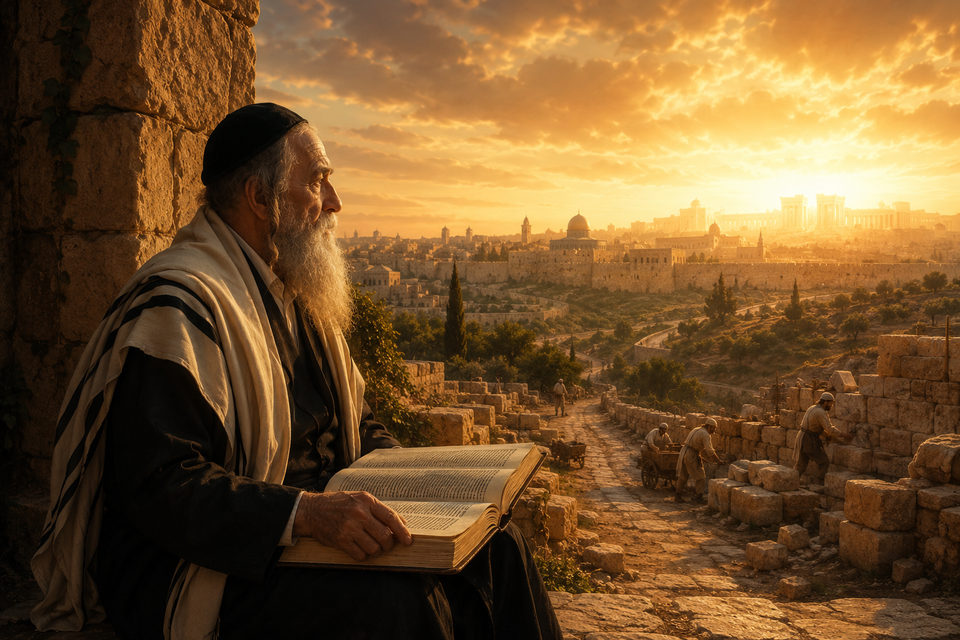
Among the deeper currents in the Torah's vision of the end of days is the teaching that the redemption arrives in two stages, through two figures — Moshiach ben Yosef and Moshiach ben Dovid. It is an ancient idea, rooted in the Gemara and the Midrash and developed across many generations. And in recent times it has become the subject of a very modern claim: that the State of Israel is itself the embodiment of Moshiach ben Yosef — the first stage of the redemption, unfolding visibly before our eyes. The Charedi Torah worldview regards that claim as a mistake — not grounded in the sources, and not consistent with what the mesorah has always understood Moshiach ben Yosef to be. To see why, we have to begin with what the concept actually is.
I. What Moshiach ben Yosef Actually Is
The primary source is the Gemara in Sukkah, which speaks of Moshiach ben Yosef — also called Moshiach ben Ephraim — as the forerunner who comes before Moshiach ben Dovid, and which, strikingly, foretells that he is destined to fall in battle and to be deeply mourned, reading into him the prophecy of Zechariah of the one "whom they pierced," over whom Israel will one day grieve (Sukkah 52a; Zechariah 12:10). From the Gemara and the Midrashim a picture takes shape: Moshiach ben Yosef is the figure who wages the wars of Hashem, who gathers in the scattered exiles, and who labors — even, the sources say, to the point of giving his own life — to prepare Klal Yisrael, in body and in soul, for the final redemption under Moshiach ben Dovid. The tradition associated with the Vilna Gaon develops this further, describing a redemption that can unfold gradually, through natural means, as Israel returns to its Land and rebuilds it.
But here is the heart of the matter, and it holds across every single one of these sources: the work of Moshiach ben Yosef is, in all of them, a work of kedushah. The wars are the wars of Hashem. The return is a return for the sake of the Torah and the Beis HaMikdash. The people are a people being strengthened in avodas Hashem. In no source — not the Gemara, not the Midrash, not the teachings of the Gra — is Moshiach ben Yosef a secular enterprise, or a nationalism detached from the service of Heaven. The holiness is not decoration on the concept. It is the concept.
II. The Modern Claim — and Why the Mesorah Cannot Accept It
Against that backdrop comes the modern reframing, developed most fully within Religious Zionist thought: that the ingathering, the rebuilding, and the wars of the modern State are themselves the unfolding of Moshiach ben Yosef — that the State is "reishit tzmichat geulateinu," the first flowering of our redemption. We have written elsewhere about the theology behind that view and about precisely where the Charedi world parts ways with it. Here the point is a narrower one.
The mesorah cannot identify the holy process of Moshiach ben Yosef with a state that was founded — openly, and proudly — by people who had cast off the Torah, and whose guiding ideology was precisely that the Jewish future would at last be built by human hands, free of the yoke of Heaven. Rav Elchonon Wasserman framed the principle sharply in his own day: that to clothe a secular movement in the garments of kedushah, and to call it the beginning of the redemption, is not a deepening of emunah but a quiet substitution for it. The externals may rhyme — there is an ingathering, there is rebuilding, there are wars — but the mesorah has never read redemption off of externals alone. A thing is not holy because it resembles, from the outside, something that is.
III. The Distinction the Whole Question Turns On
Everything here rests on a single distinction, and it is worth making with great care, because the confusion lives exactly where the distinction gets blurred. The Charedi world does not claim to know Hashem's cheshbonos. It is entirely possible — and many Gedolim have said as much — that the events of the last century, the State's existence among them, play some role in the unfolding of Hashem's plan. Nothing at all happens outside of His hashgachah.
But "part of Hashem's plan" and "holy" are not the same thing, and the Torah has never once confused them. Hashem's hashgachah runs through everything — it ran through Paroh and through Nevuchadnetzar no less than through the tzaddikim — and the fact that He steers an event toward His purposes does not sanctify the event, nor the human hands that carried it out. Everything that occurs is under His supervision. Not everything that occurs is kadosh. To mistake the one for the other is the entire error in miniature: it reads holiness into a thing for no deeper reason than that the thing turned out to matter.
IV. What Redemption Actually Is
Beneath that distinction lies a deeper one still — a disagreement, in the end, about what redemption even means. In the modern nationalist frame, the Geulah is essentially political and geographical: a people gathered in, a land held and defended, a sovereignty restored. The Torah's redemption is something else at its very core. It is the revelation of malchus Shamayim — the Kingship of Heaven made manifest in the world — a transformation that is spiritual before it is anything else, in which "Hashem will be King over all the earth" (Zechariah 14:9) and the whole world is filled with the knowledge of Him. A return to the Land that is not also, and above all, a return to Hashem is, in the Torah's own terms, not yet the redemption at all.
This is why the Charedi world cannot read the founding of a secular state as a redemptive stage — and let it be clear that this is not because the Land does not matter. The Land matters infinitely. It is because redemption, in the only sense the Torah ever uses the word, is the reign of Heaven — and the reign of Heaven is precisely what a movement built on casting off the yoke of Heaven did not, and could not, bring.
V. So What Do We Actually Await?
What, then, does the Charedi world expect? Moshiach ben Yosef as the sources themselves describe him: a person, not a regime; a tzaddik steeped in Torah, not a parliament; one who fights the wars of Hashem and gathers the exiles under the banner of kedushah and yiras Shamayim, and who suffers — perhaps, as the Gemara teaches, even to the point of death — in order to prepare the way. We know from the Nevi'im that the road to the Geulah may well run through pain, through struggle, and through conflict; the sources never once promised an easy path. But we know with equal certainty where that road ends: not in the triumph of human power, but in the full and undimmed revelation of Hashem's. The redeemers, when they come, will come bearing the whole light of His will.
VI. Be Patient, Be Pure
The teaching of Moshiach ben Yosef carries a quiet instruction folded inside it. It tells us that the redemption truly does unfold in stages — but that every stage must be in line with the Torah, because a "stage of the Geulah" that contradicts the Torah is a contradiction in its own terms. And so we do not force the Geulah through revolutions, and we do not sanctify a nationalism that stands outside the Torah by draping it in borrowed holiness. We do something slower, and surer, instead. We daven, we learn, we do teshuvah, and we work to purify ourselves — and we wait, with emunah, for the true redeemers, both of whom will come only in the full light of Hashem's will.
Be patient. Be pure. And do not mistake the scaffolding of history for the building that Hashem is actually raising.
May we merit to see the true redemption, in which the Kingship of Heaven is revealed over all the earth, and may both redeemers come speedily and in holiness — bimheirah b'yameinu, amen.
Sources
The concept itself
- Sukkah 52a — Moshiach ben Yosef as the forerunner of Moshiach ben Dovid, who wages the wars of Hashem and is destined to fall and be mourned, on the verse of Zechariah 12:10; the broader Midrashic tradition and the teachings associated with the Vilna Gaon on a redemption that may unfold gradually — in all of which the work of Moshiach ben Yosef is a labor of kedushah
Redemption and its meaning
- The documented position of Rav Elchonon Wasserman that clothing a secular movement in the garments of holiness, and calling it the beginning of redemption, substitutes for emunah rather than deepening it
- Zechariah 14:9 — that the redemption is the revelation of malchus Shamayim, Hashem King over all the earth; and the principle, taught by the Gedolim, that while all events fall under Hashem's hashgachah, not everything that occurs is thereby holy
The structural relationship to other articles in this series
- "Was Rav Kook's Approach in Line With Our Mesorah?" — the theology this question engages, treated directly
- "Why Don't Charedim View the State as Reishit Tzmichat Geulateinu?" — the redemptive claim examined on its own terms
- "What Happens to the State When Moshiach Comes?" — human systems in the light of the true Geulah