
Why Do Charedim Cover Their Heads with a Tallis When Davening?
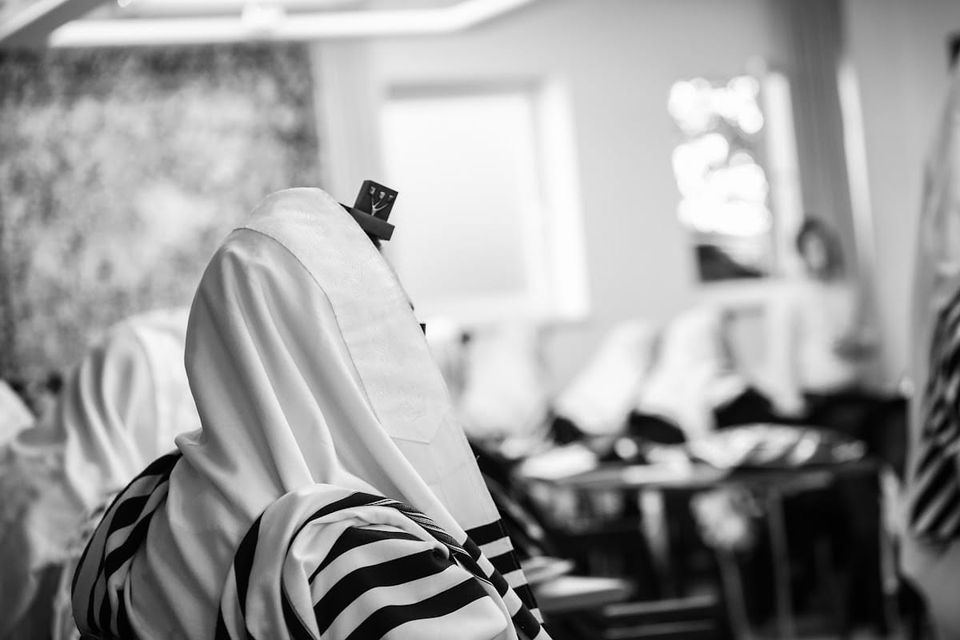
To an outsider, a man with his tallis drawn up over his head can look withdrawn — hidden away, even shut off from the room. To the one inside it, it is the exact opposite. It is closeness, not distance; the most dignified form of submission a body can make; and an act carrying real halachic and spiritual weight. The Charedi Jew pulls his tallis over his head in tefillah not out of habit and not out of symbolism alone, but out of halacha, out of kavod, and out of a sharpened awareness of precisely Whom he is standing before. Let us look at the layers — from the Shulchan Aruch down to the Kabbalah.
I. It Begins as Halacha, Not Sentiment
Start with the law. The mitzvah of the tallis is not only to wear it but to wrap in it — the brachah we say is l'his'ateif b'tzitzis, to envelop oneself in tzitzis. The Shulchan Aruch describes the proper atifah: drawing the tallis around the body and up over the head (Orach Chaim 8:2), and the Mishnah Berurah explains that this full wrapping is the ikar, the essential form of the act — a person bearing himself like a servant who stands before his master in awe. Covering the head, then, is not a decorative flourish stitched onto the mitzvah. At least for the moment of the brachah, it is part of how the mitzvah is meant to be performed in the first place.
And keeping it drawn over the head onward through the davening itself — through the Shemoneh Esrei, especially — is the practice of the scrupulous: a hidur, born of the simple wish to hold that posture of awe for as long as one is actually standing before the King. The halacha opens the door; the yarei Shamayim walks all the way through it.
II. The Posture of Awe and Humility
Standing before the Ribbono Shel Olam calls for a particular bearing — a trembling respect — and drawing the tallis fully over the head is that bearing made physical. It is the stance of a servant who would not dare lift his eyes to his Master's face. And it stands in a long and unbroken Biblical line. When Hashem revealed Himself at the burning bush, "Moshe hid his face, for he feared to gaze upon God" (Shemos 3:6). When Eliyahu HaNavi sensed Hashem about to pass before him at the mountain, "he wrapped his face in his mantle" (Melachim I 19:13). The instinct is ancient, and it is identical in both: in the sheer nearness of the Divine, a person covers his face — not because he is far, but because he is so close that the closeness itself overwhelms him. The Jew who pulls his tallis over his head is stepping, quietly, into that very same moment.
III. It Draws the World Out and the Heart In
There is a plainly practical dimension to it as well. Tefillah lives or dies on kavanah, on focus, and Chazal stressed the value of davening in a fixed place, set apart from distraction (Berachos 6b). The tallis drawn over the head is, among other things, the simplest device for that ever invented: it shuts out the room, the faces, the motion, and leaves a Jew alone with his words and his Maker. In the middle of a crowded shul it builds a private chamber — a small tent of cloth into which the world does not follow, and inside which only the tefillah remains. The truly focused will daven this way even when not a soul is watching, because being seen was never the point. The point was to see no one at all but the King.
IV. The Kabbalah: A Cloak of Light
The deeper tradition adds a further layer still. The Kabbalah speaks of the tallis as a garment of holiness — a cloak that draws a holy light down upon the one who wraps in it as he should, enclosing him in kedusha much as the Ananei HaKavod, the Clouds of Glory, enclosed our ancestors in the midbar. The Rishonim draw a striking image from the verse "oteh or kasalmah," "He wraps Himself in light like a garment" (Tehillim 104:2): that when a Jew wraps himself in his tallis, he is — in a small and reverent way — robing himself in imitation of the Creator, who robes Himself in light. The fabric, in that instant, becomes something more than fabric. It becomes a canopy of kedusha, drawn close around a soul at prayer.
V. Why Mainly Married Men?
A fair question is often asked here: why, in most Ashkenazi Charedi communities, is it married men one sees wrapped this way? The answer lies one step further back, in the minhag that governs the tallis gadol itself. In most Ashkenazi communities, an unmarried man wears only the tallis katan and does not take up the large tallis gadol until he marries — a custom the Magen Avraham connects to the Torah's own placement of the mitzvah of tzitzis directly beside the verses of marriage (Orach Chaim 8:3). Marriage marks a man's entry into the fullness of his communal and spiritual responsibilities, and the tallis gadol becomes one of its quiet signs. In many Sephardi and Chassidic communities, by contrast, even unmarried young men wear the tallis gadol — and cover their heads with it — from a far younger age. The covering of the head simply follows the tallis.
VI. A Quiet Protest Against a Culture of Display
There is one more thing the tallis over the head says, almost without intending to. In a world that prizes the visible self above nearly all else — the image curated, the face presented, the moment performed for an audience — a Jew who pulls a tallis over his head is doing something quietly radical. He is making himself, for these few minutes, deliberately unseen. He is announcing, in cloth rather than words: I am not here to be looked at. I am here to submit. The covering of the head is, in its own way, the precise opposite of the selfie. It turns the face away from the world and toward the one Audience the world keeps managing to forget.
VII. A Canopy of Kedusha
So the tallis over the head is never merely fabric. It is, all at once, a shelter and a sanctuary, a chuppah and a flag of surrender — armor against distraction and a private chamber for the soul. The Torah Jew wraps himself fully, hides himself from the world, and pours out his heart — not for display, and not for any culture, but for the oldest reason there has ever been: that when a person comes to stand before the King of Kings, he covers himself in trembling, and lets his tefillah rise.
May our prayers ascend in purity, may we merit to stand before Hashem in awe and in love, and may He gather us beneath the canopy of His peace — bimheirah b'yameinu, amen.
Sources
The halacha of wrapping
- Shulchan Aruch, Orach Chaim 8:2 — the proper atifah, drawing the tallis around the body and over the head; Mishnah Berurah on Orach Chaim 8 — that this full wrapping is the essential form, a person bearing himself like a servant before his master in awe; the brachah of l'his'ateif b'tzitzis
Awe, focus, and elevation
- Shemos 3:6 — Moshe hiding his face in awe at the burning bush; Melachim I 19:13 — Eliyahu wrapping his face in his mantle before Hashem
- Berachos 6b — the value of a fixed place, set apart from distraction, for tefillah
- Tehillim 104:2 — oteh or kasalmah, He wraps Himself in light like a garment, and the Kabbalah's image of the tallis as a cloak of kedusha enclosing the davener like the Ananei HaKavod
The custom of the tallis gadol
- Magen Avraham, Orach Chaim 8:3 — the Ashkenazi minhag connecting the tallis gadol to marriage
The structural relationship to other articles in this series
- "Why Do Charedim Wear Black, Two-Layered Yarmulkas?" — the companion question of head-covering and dignity
- "Are You Allowed to Daven in Shorts?" — dignity and dress in the act of tefillah
- "What Does the Word 'Charedim' Mean?" — the yiras Shamayim this practice gives form to