What Is Chinuch Atzmai and Why Was It Created?
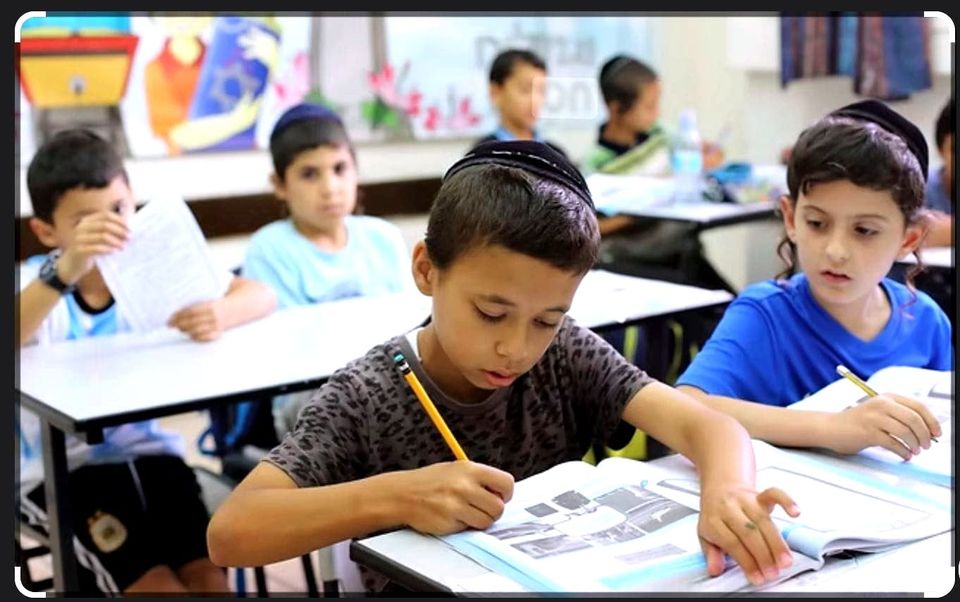
Chinuch Atzmai — literally "Independent Education" — is the name of the Charedi school network in Israel, established in 1953 to give Torah children a Torah education beyond the reach of state control. But a school system is an answer, and to understand the answer you have to understand the question it was built to address. Chinuch Atzmai was born in a moment when the Torah education of an entire generation of Jewish children — many of them new immigrants — genuinely hung in the balance.
I. The Crisis That Made It Necessary
In the first years of the state, hundreds of thousands of Jews poured into the country, many from Yemen, Morocco, Iraq, and Persia — families of deep, unbroken faith, who had carried their Yiddishkeit intact across centuries and continents. They were housed in the ma'abarot, the sprawling immigrant transit camps, and there they collided with a secular Zionist establishment that often regarded their intense religiosity as a backwardness to be cured.
What followed is a documented and painful chapter of the country's history. In the camps, religious immigrant children were steered into secular education, frequently against the express wishes of their parents; by many accounts, the peyos of Yemenite boys were cut. The religious immigrants resisted fiercely — they had not survived exile to watch their children's faith stripped away in the promised land — and the confrontations turned bitter and, in places like Ein Shemer, Beit Lid, and Pardes Hanna in 1950, even deadly. The struggle over the education of these children grew so intense that it helped bring down the government. To the Gedolei Yisrael, what was unfolding was nothing less than an attempt to sever a whole generation from the mesorah handed to them at Sinai — and they refused to stand by and let it happen.
II. The Birth of an Independent System
The turning point came with the State Education Law of August 1953. That law swept away the older system of party-run "streams" and replaced it with two state networks: the secular Mamlachti schools and the state-religious Mamlachti Dati schools. But the Torah leadership of Agudath Israel would not consent to folding Charedi chinuch into any framework controlled by the Ministry of Education. Through the Moetzes Gedolei HaTorah, the Council of Torah Sages, they secured within that very law the recognition of a separate network — Chinuch Atzmai, Independent Education — that would be partly funded by the state yet independent in everything that mattered. Its first chairman was Rav Zalman Sorotzkin, the Lutzker Rav.
III. The Gedolim Who Built It
It is no accident that this rose up in the post-Holocaust generation. These were leaders who had just watched the great Torah centers of Europe reduced to ash, and who were seized by a single determination: that Torah Jewry would be rebuilt, not quietly dissolved into the new state. The Chazon Ish grasped with total clarity the spiritual danger that state-controlled education posed to Torah life. Rav Zalman Sorotzkin took the helm. And across the ocean, Rav Aharon Kotler threw himself into the project as one of its founders and the tireless engine of its American fundraising, traveling and pleading and building the network of "Friends of Chinuch Atzmai" that kept the schools alive — a labor later carried forward under the guidance of Rav Shach, Rav Elyashiv, and Rav Shteinman.
The breadth of support is worth noting. Even Rav Yosef Ber Soloveitchik — the towering leader of American Modern Orthodoxy, a world apart in hashkafah — lent his name to the cause, writing that a school system of this kind was of the greatest importance for the very survival of Torah Judaism in the Holy Land. When figures so far apart agree that something must be protected, it tells you how much was understood to be at stake.
IV. The Sephardi Gedolim and Their Children
The secularizing pressure fell heaviest of all on the great waves of Sephardi and Mizrahi immigrants, whose children were the most exposed — and the Sephardi Torah world rose to shield them. In the founding era, Chacham Ezra Attiya, the Rosh Yeshiva of Porat Yosef, labored to protect the children of these families and to plant Torah education where it was most threatened. In the generation that followed, Chacham Ovadia Yosef would make the restoration of the crown of Sephardi Torah the mission of his entire life, with Chacham Ben Zion Abba Shaul among those who carried the work forward. For countless children of Yemen, Morocco, and Baghdad, Chinuch Atzmai became the refuge in which the faith of their parents could be preserved rather than erased.
V. What Kind of Schools — and How They Differ
In practice, Chinuch Atzmai operates Talmudei Torah and chadarim for boys and Beis Yaakov schools for girls, with a curriculum built around limudei kodesh and a comparatively small place for secular subjects. Today it educates roughly eighty thousand students in schools across the country.
The distinction is one of approach. Chinuch Atzmai is, before anything else, independent: the Ministry of Education does not hire or fire its teachers, does not register its pupils, and does not set its hashkafa. The Gedolei Torah do. Its orientation is fully Charedi rather than Zionist, its standards of separation and tznius are those of the Charedi world, and its center of gravity is the beis medrash. It is a system designed, from the ground up, to answer to the Torah and not to the state.
VI. Funded, but Not Controlled
That independence sits inside a delicate arrangement. Chinuch Atzmai receives partial government funding — historically on the order of 55 percent of what state schools receive, paired with a requirement to teach a corresponding share of the Ministry's curriculum — while retaining control over its teachers, its curriculum, its religious policies, and its daily schedule with its long hours of kodesh.
But partial funding is also partial leverage, and the state has returned to that lever again and again, using the money as a means of pressing for greater control. It is precisely this tension that leads many in the Charedi world to build, alongside Chinuch Atzmai, fully independent mosdos that accept no government support at all — and therefore answer to no one but the Gedolim. The price of total independence is doing without the state's shekels; for many, it is a price well worth paying.
VII. Still a Battle, Still Needed
If anything, Chinuch Atzmai is more relevant now than at its founding. As the government continues to push — through "core curriculum" mandates and recurring threats to funding, as documented elsewhere in this series — for ever-greater control over Charedi education, Chinuch Atzmai remains exactly what it was created to be: a wall around Torah chinuch, guided by Gedolei Yisrael rather than by bureaucrats. For seventy years it has raised generation after generation of bnei Torah, and it still stands on the single principle that called it into being — that the Torah education of a Jewish child belongs to the Torah, and to no government.
That, in the end, is what Chinuch Atzmai is: a refusal turned into an institution. A refusal to let one more generation be severed from Sinai — and the quiet, stubborn conviction that what a Jewish child learns, and Whom he is taught to revere, was never the state's to decide.
May the Torah of our children be guarded unbroken, may every Jewish child be raised in its light, and may the chinuch of Klal Yisrael flourish until the coming of Moshiach — bimheirah b'yameinu, amen.
Sources
The founding and its history
- The establishment of Chinuch Atzmai in 1953 by the Moetzes Gedolei HaTorah of Agudath Israel, recognized as an independent network within the State Education Law of August 1953, which replaced the older party "streams" with the Mamlachti and Mamlachti Dati systems
- Rav Zalman Sorotzkin (the Lutzker Rav) as its first chairman; Rav Aharon Kotler as a founder and the driving force of its American fundraising; the endorsement of figures as distant in hashkafah as Rav Yosef Ber Soloveitchik
The crisis it answered
- The documented struggles over forced secularization in the ma'abarot in the early 1950s — religious immigrant children steered into secular schooling, the reported cutting of Yemenite boys' peyos, and the bitter, sometimes deadly clashes at Ein Shemer, Beit Lid, and Pardes Hanna — a crisis grave enough to shake the government
- The labors of the Sephardi Gedolim — Chacham Ezra Attiya in the founding era, and later Chacham Ovadia Yosef and Chacham Ben Zion Abba Shaul — to protect Mizrahi children from spiritual uprooting
Its structure today
- A network of Talmudei Torah and Beis Yaakov schools educating roughly 80,000 students, partially state-funded (on the order of 55 percent) while retaining independence over teachers, curriculum, and religious policy
The structural relationship to other articles in this series
- "Does the State of Israel Try to Force Secular Education in Charedi Schools?" — the same battle in its present form
- "Why Do Charedim Avoid Secular Education?" — the hashkafa beneath the system
- "Do Charedim Support a Halachic State?" and "What Does the Word 'Charedim' Mean?" — the worldview Chinuch Atzmai exists to transmit