
They Hate the Miracles: How Israel's Supreme Court Declared War on the Jewish Soul
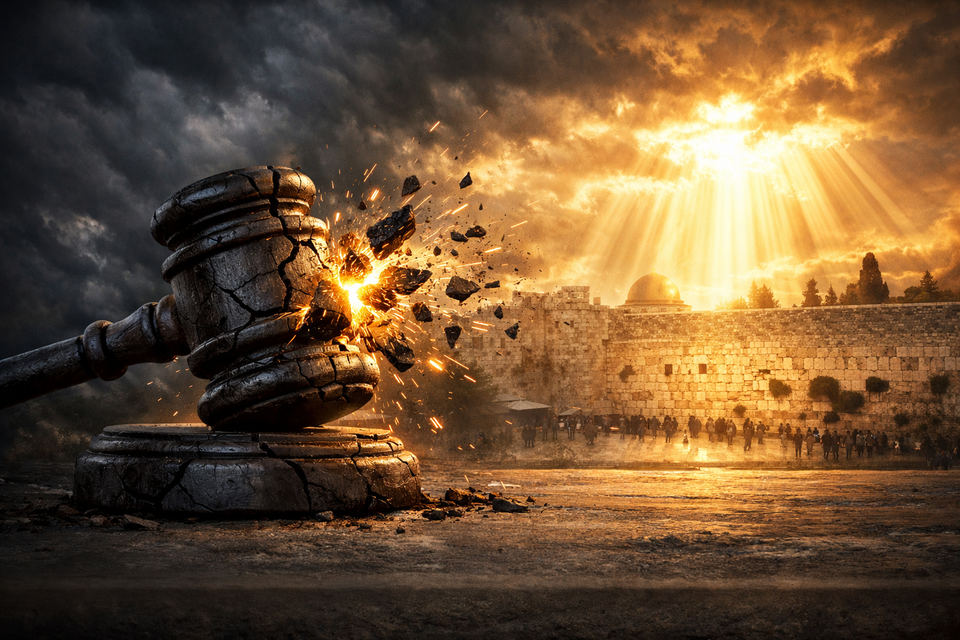
A nation is returning to its Father in Heaven. The miracles are beyond comprehension. And the Israeli Supreme Court cannot stand to watch.
Something is happening in Eretz Yisrael that the secular establishment did not plan for, did not predict, and does not know how to stop.
Since October 7th, a tidal wave of teshuva has been sweeping across the Jewish people. Not a trickle. Not a trend. A wave.
The numbers are real. The testimonies are real. The miracles are real.
And the Supreme Court of Israel — an institution whose entire identity is built on the proposition that the Jewish state can and should be governed without God — is watching it happen with barely concealed fury.
Because if this continues, their world ends.
What the Numbers Tell Us
Let us start with the facts, because the facts are extraordinary.
A survey conducted by the Hebrew University found that among those who experienced the war directly — through bereavement, injury, captivity — roughly half reported higher levels of religiosity and spirituality. A quarter said they had become more religious. A third described a significant rise in spirituality.
The Jewish People Policy Institute (JPPI), in its November 2025 survey, found that 27% of Israeli Jews reported increased traditional observance since the war began. Among Jews under 25, that number climbs to one-third. Among traditionally-leaning youth in that age group, the net increase in observance was 40 percentage points.
A separate poll by Hiddush — an organization that openly advocates for separation of religion and state — found that 25% of respondents said October 7th strengthened their faith in God.
Think about that. Even an organization that wants religion out of public life was forced to publish data showing that a quarter of Israelis drew closer to Hashem.
The Chabad network surveyed 211 of its rabbis across the country. 86% reported increased synagogue attendance since the attack. 98.6% reported seeing an increase in personal Jewish practice among their community members.
Tefillin pop-ups appeared in the streets. Challah bakes spread through neighborhoods. Modest dress became a public statement of solidarity and faith. Songs saturated with Torah language topped Israeli music charts — "Tamid Ohev Oti" ("He Always Loves Me"), written by the Breslov Chassidic rav Rabbi Shalom Arush and performed by singer Sasson Shaulov, received over 43 million views. It was sung at concerts for soldiers, by hostage families celebrating their loved ones' return, in Times Square — and some reported it even reached the tunnels of Gaza, with hostages emerging knowing its words by heart.
Secular Israeli TV host Ofira Asayag began lighting Shabbos candles live on-air and pledged not to stop until every hostage came home.
Something is happening here that cannot be explained by sociology or politics. Something is happening here that Chazal told us to look for.
From the Tunnels of Gaza
But the most powerful testimony of all came not from surveys.
It came from the hostages.
They went in secular. Many had never touched a siddur. Many had grown up in kibbutzim where Shabbos was just another day.
They came out with emunah that most of us spend a lifetime trying to build.
Or Levy, held deep underground in a Hamas tunnel, stared at a crack in the ceiling and began to speak to God. "Before October 7, I was not a big believer," he said. But in that darkness, something shifted. He began to pray. When an extra ration of pita arrived, when a cup of warm tea was passed to him — he took it as a sign. "Whenever it became too hard, I'd ask Him to save us."
Agam Berger, the 20-year-old soldier who survived 482 days in captivity, had never kept Shabbos before. In Gaza, she fasted on Yom Kippur. She refused bread on Pesach. When a siddur appeared in the tunnel — dropped by an Israeli soldier months earlier, passed through the hands of her captors — her mother later said she had dreamed of a siddur just days before it arrived. "How do you explain that?" her mother said. "That's not chance. That's faith."
Matan Angrest, a wounded tank soldier — the sole survivor of his crew — was dragged into Gaza and subjected to severe torture. Just one month into his captivity, still in shock, he demanded tefillin, a siddur, and a Tanach from his captors. They complied. The siddur was delivered personally by a senior Hamas official. From that day forward, he davened three times a day. "It gave me strength. It protected me," he said. "Even in the deepest tunnels, the soul can't be taken captive."
Bar Kupershtein, kidnapped from the Nova festival, told the world: "I wasn't very religious beforehand, only traditional, but in captivity, one really connects to God, you talk to him. He saved me — not once or twice. Every day that I stayed alive was a miracle."
When Ohad Ben Ami was released, one of the first things he asked to learn was how to make Havdalah — the ceremony he had watched other hostages perform together, huddled in a tunnel, marking the end of Shabbos in hell.
These are not inspirational anecdotes. These are testimonies from the front lines of geulah.
Hashem took secular Jews and placed them in the darkest pit the world could produce — and they emerged more Jewish than when they went in.
This Was Always the Plan
The Chofetz Chaim and many other poskim and mekubalim taught that the final geulah would not come in spite of a secular Jewish population — it would come through a great wave of return. The neshamot of Klal Yisrael carry a flame that cannot be extinguished. Not by modernity. Not by ideology. Not by generations of secular education.
Darkness, it turns out, cannot kill a Jewish soul. It can only illuminate it.
The Rambam writes in Hilchos Teshuva that the Torah itself promises that Klal Yisrael will ultimately do teshuva before the geulah. Not because they are forced to. But because something awakens within them. Something remembers.
We are watching that awakening in real time.
And it terrifies the people who have built their entire world on the premise that the Jewish people are done with Hashem.
The Supreme Court Cannot Afford to Let This Continue
Now we come to the heart of the matter.
The Israeli Supreme Court is not a neutral legal body. It is the fortress of a specific ideology — an ideology built on the belief that Israel can and must be a state "like all the nations," governed by universal liberal values, untethered from Torah, from halacha, from Jewish destiny.
That ideology has a mortal enemy.
Teshuva.
Because the moment Jews return to Hashem in large numbers, the entire premise of the secular Zionist project collapses. If Hashem is real, if hashgachah is real, if the miracles happening daily in this war are real — then the Supreme Court's entire worldview is wrong.
And so the Supreme Court has been doing what threatened institutions do.
It fights.
In June 2024, the Supreme Court issued a unanimous ruling ordering the government to conscript yeshiva students and immediately cut off all government funding to yeshivas whose students did not comply with draft orders. Not gradually. Not with a transition plan. Immediately.
Think about the timing. The country is at war. Jewish men are dying in Gaza. And the Supreme Court's top priority — decided unanimously, with every single justice signing on — was to target the yeshivos. To cut off the funding that allows tens of thousands of Jews to learn Torah.
The leader of Shas, Rav Arye Deri, responded with words that every Jew who understands what is at stake should hear: "The judges of the High Court of Justice want to saw off the branch of existence of the Jewish people."
Yitzchak Goldknopf, leader of United Torah Judaism, called it "a sign of disgrace and contempt." And he stated plainly what Torah Jews have always known: "Without the Torah, we have no right to exist."
This was not about military fairness. Israel has managed the Charedi exemption in various forms since 1948. The Supreme Court was not suddenly moved by concern for IDF soldiers.
This was about power. About who controls the soul of the Jewish state.
The secular establishment looked at a country at war — a country turning to Tehillim, wrapping tefillin, lighting Shabbos candles, streaming Torah shiurim — and they panicked.
Because if the Torah world is allowed to grow, if the yeshivos are allowed to flourish, if the teshuva wave is allowed to continue unchecked — there will come a day when the Supreme Court's vision of Israel is a minority view.
That day is coming faster than they expected.
The Miracles They Cannot Explain
Meanwhile, history is happening.
Iran launched hundreds of ballistic missiles at Israel — and the sky held. Hezbollah fired tens of thousands of rockets — and Israel survived. The IDF has operated on multiple fronts simultaneously in a way that military analysts around the world have struggled to explain. Again and again, strikes have been precise in ways that defy ordinary probability. Buildings emptied just before. Attacks failed for inexplicable reasons. Iron Dome intercepts that should not have been possible were recorded and celebrated.
Omer Alali, a former analyst at Israeli Defense Intelligence and the Prime Minister's Office, tried to capture what happened after Iran's missile barrage in words his secular colleagues could understand: imagine a basketball player who practiced alone for thirty years, steps onto the court for the first time — against Michael Jordan — and wins, 100 to 0. "This," he wrote, "is the event."
He didn't call it a miracle. He didn't have to. Everyone understood.
Yinon Magal, one of Israel's most prominent television hosts, began speaking openly on his flagship Channel 14 program about becoming more observant since the war began — a secular man, on mainstream Israeli television, publicly finding his way back to Hashem.
The Supreme Court cannot explain it. They have no framework for it. In their world, history is made by human decisions, military strategy, and political alliances. In their world, what is happening right now should not be possible.
But we know Whose world this actually is.
The Deeper Truth
The Vilna Gaon and many acharonim teach that the process of geulah is not a sudden event. It is a gradual awakening — ikvesa d'Meshicha, the footsteps of Mashiach — that builds through a series of historical upheavals until the world can no longer deny what was always true.
We are inside that process.
The signs of that process include: wars involving Persia, global instability, and — most importantly — a great wave of teshuva shleimah among Klal Yisrael.
All three are present.
The secular establishment built a state designed to replace Jewish destiny with Jewish nationalism. It partially succeeded. For decades, it seemed like the project might work — that you could have a Jewish country without Hashem at the center.
October 7th ended that illusion.
The hostages called out to Hashem in the tunnels and He answered them. The soldiers wrapped tefillin before battle and felt they were not alone. The families lit candles and prayed and refused to stop believing. And a quarter of the nation — by the survey of an organization that opposes religious life in the public square — said their faith in God grew stronger.
This is not a trend. This is a tidal shift.
What the Supreme Court Cannot Stop
Here is the great irony that history will record.
The Israeli Supreme Court has spent decades trying to limit Torah's influence on the Jewish state — restricting yeshiva funding, fighting religious exemptions, blocking halachic standards in conversion, marriage, and public life.
And then came October 7th.
And Hashem bypassed every one of their rulings.
He didn't need the Knesset. He didn't need the Chief Rabbinate. He didn't need a law, a budget, or a government program.
He sent His people into darkness. And in that darkness, they found Him.
A hostage in a Hamas tunnel dreamed of a siddur — and it arrived the next day. A secular woman cut up her immodest clothing on TikTok as an offering to Hashem. Kibbutzniks from the left-wing south, survivors of the worst atrocity in Israel since the Holocaust, emerged from the trauma and began keeping Shabbos.
The Supreme Court can cut funding to yeshivos. They cannot cut the connection between a Jewish soul and its Creator.
The Ribbono Shel Olam is doing His own kiruv.
And He is very, very good at it.
A Word for Those Watching
If you are one of the many thousands who has felt something shift inside you since October 7 — you are not imagining it.
If you found yourself saying Tehillim for the first time in years, or wrapping tefillin you hadn't touched since your bar mitzvah, or feeling a pull toward something you cannot quite name — that pull is real. That is your neshamah doing what Jewish neshamot have always done when the world shakes.
Returning.
The Supreme Court does not want you to return. The secular establishment does not want you to return. The ideology that has dominated Israeli public life for decades needs you to stay exactly where you are — disconnected, secular, and manageable.
But Hashem is calling.
And if history is any guide — if the hostage testimonies mean anything, if the surveys mean anything, if the miracles of the past seventeen months mean anything —
His call is louder than their rulings.
Not because of the Supreme Court. Not because of any government. But because the Ribbono Shel Olam made a promise to His people — and He keeps His promises.
Sources & Data
Survey research
- Hebrew University survey on religiosity and spirituality among those directly affected by the war
- Jewish People Policy Institute (JPPI), Israeli Society Index, November 2025
- Hiddush survey on faith and God after October 7
- Chabad rabbis network survey, 211 rabbis across Israel
- Omer Alali (former analyst, Israeli Defense Intelligence & Prime Minister's Office), post on X, April 2024
Legal & institutional
- Israeli Supreme Court rulings on Haredi conscription and yeshiva funding, March and June 2024
Hostage testimonies
- Or Levy, Agam Berger, Matan Angrest, Bar Kupershtein, Ohad Ben Ami, Omer Shem Tov
- As reported in: The Times of Israel, Jerusalem Post, JTA, The Christian Science Monitor, Aish, Fox News, CNN, Chabad.org, VINnews, Israel National News