
Do We Pray for the End of the Secular State of Israel in Shemoneh Esrei?
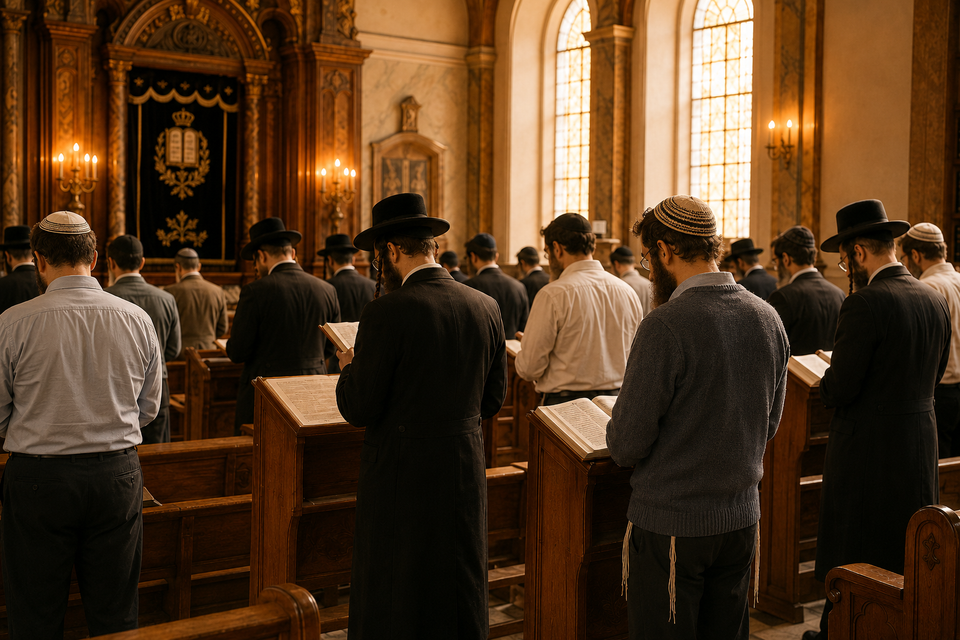
Three times a day we stand and daven the Shemoneh Esrei, composed by the Anshei Knesses HaGedolah — among them the last of the Nevi'im — with every word weighed and eternal. And woven through its brachos is a remarkably detailed picture of the future we are begging Hashem to bring. Pause on the plain meaning of those words, and a striking realization surfaces: the future we ask for, three times a day, is structurally different from the modern secular State of Israel. This is not a political claim. It is a tefillah claim — and it deserves to be taken seriously.
Let us look at the brachos themselves.
I. "Hashiva Shofteinu" — Bring Back Torah Justice
The eleventh brachah asks Hashem to "restore our judges as at first, and our counselors as at the beginning... and reign over us, You, Hashem, alone." Every phrase is deliberate — and it is drawn straight from the navi: "v'ashiva shoftayich k'varishona, v'yo'atzayich k'vatchilah" — I will restore your judges as at first, and your counselors as at the beginning (Yeshayahu 1:26).
We are asking, in plain words, for the return of a Torah system of justice — ultimately the Sanhedrin — judging by the law of Hashem, and for Hashem's undivided kingship over us. Rav Elchonon Wasserman pressed exactly this point in his writings: when we say "reign over us, You alone," we are declaring that our hope rests in the Kingship of Hashem, and not in any human government set up in its place. A legal order built on Western, secular, democratic foundations is precisely the thing this brachah asks Hashem to remove and replace.
II. "V'liYerushalayim" — The City Hashem Rebuilds
The fourteenth brachah asks Hashem to return to Yerushalayim in compassion, to dwell within it, to rebuild it soon as an eternal structure, and to "establish the throne of David within it." And notice, carefully, who does the building. "Boneh Yerushalayim Hashem" — it is Hashem who builds Yerushalayim (Tehillim 147:2).
The Yerushalayim of this brachah is not a municipality with a mayor, a budget, and a flag. It is Hashem's own city, rebuilt by His hand, with the Beis HaMikdash at its heart and the throne of David established within it. We are not davening for a capital confirmed by an election. We are davening for the city of the King.
III. "Es Tzemach David" — The King We Are Actually Waiting For
The fifteenth brachah asks Hashem to "speedily cause the offspring of David, Your servant, to flourish... for we hope for Your salvation all day long." This is a plea for the Davidic monarchy — for the malchus that Hashem swore would stand forever: "v'chonanti es kisei mamlachto ad olam," I will establish the throne of his kingdom for eternity (Shmuel II 7:13). It is not a plea for a prime minister, or a coalition, or a president.
And this is no peripheral hope. The Rambam counts the belief in Moshiach and the restoration of the Davidic kingship among the very foundations of our faith; one who does not await it, he writes, denies not only the prophets but the Torah and Moshe Rabbeinu himself (Hilchos Melachim 11:1; Peirush HaMishnayos, Sanhedrin, Perek Chelek). Three times a day, we declare which government we are truly waiting for — and it is his, not any sovereignty we could assemble on our own.
IV. "V'sechezenah Eineinu" — The Shechinah Returns
And the seventeenth brachah asks that our own eyes behold Hashem's return to Tzion in compassion — "hamachazir Shechinaso l'Tzion," the One who returns His Presence to Tzion. This is not a poetic metaphor for national revival. It is a literal request for the Shechinah to come back — which, Chazal teach, arrives together with the Beis HaMikdash rebuilt, the korbanos restored, and the whole world brought under the sovereignty of Heaven: "v'haya Hashem l'melech al kol ha'aretz" — Hashem will be King over all the earth (Zechariah 14:9).
That is the summit the entire tefillah climbs toward. It is not a secular parliament. It is malchus Shamayim, fully revealed.
V. So — Are We Davening for the End of the State?
Set the four brachos side by side and the question asks itself. If we plead, three times a day, for the Sanhedrin to return, for Hashem alone to reign, for the throne of David to be re-established, and for the Shechinah to come home to a Yerushalayim rebuilt by the hand of Heaven — then we are asking for a reality that a secular democracy, by its very structure, is not. In that honest sense, yes: we are davening for the secular order to give way to the Divine one.
But let us be exact about what that does and does not mean, because the distinction is everything. It does not mean, chas v'shalom, that we wish harm upon a single Jew. It does not mean we are blind to the good that Hashem's hidden hand may have brought through these decades, nor ungrateful for the safety and the flourishing of millions of Jews in the Land. We daven for the welfare of every Jew, always and without exception. What we daven against is not Jews, and not Jewish life — it is a structure and an ideology: the founding premise of a Jewish state built as a secular enterprise, run without the yoke of Torah, with the rabbanim displaced by politicians and the promise of Moshiach quietly traded for a state of our own making. Rav Reuven Grozovsky, in his classic work on precisely this question, argued the principle plainly: a Jewish state raised up by human political effort in place of Divine deliverance, and without accepting the yoke of Torah, is a departure from the very principles that define us as a people. We are not davening for catastrophe. We are davening for transformation — for everything to be lifted, at last, into kedushah.
VI. Daven With Your Eyes Open
So let us state it plainly, without flinching. To daven the Shemoneh Esrei is, by the plain definition of its own words, to daven for the end of a secular Israel — for the day its Western courts give way to the Sanhedrin, its elected sovereignty to the throne of David, and its secular character to the revealed Kingship of Hashem. This is not a Charedi reading pressed onto the tefillah from the outside. It is simply what the words say. And it carries a consequence that ought to be said clearly: every Jew who davens these brachos — every single one, of every camp, however deeply attached he may be to the state as it stands today — is asking Hashem, three times each day, for that very state to become something it is not.
So the one question worth asking is the one each of us must put to himself: do I mean what I say? When my lips ask for Hashem alone to reign, for the Sanhedrin to return, for the throne of David to be restored, and for Yerushalayim to be rebuilt by the hand of Heaven — is that, truly, what my heart is waiting for?
The Charedi world is not "anti" anything Jewish. It is pro-Torah, all the way to the root. Its daily tefillos are simply the most honest possible statement of what it longs for: not a permanent peace with a secular order, but the full and final revelation of the Kingship of Hashem over all the earth. We say the words because we mean them — and we wait, with our eyes open, for the day they are answered.
May our eyes behold His return to Tzion, may His Kingship be revealed over all the earth, and may we merit the words of our tefillos fulfilled in their fullness — bimheirah b'yameinu, amen.
Sources
The brachos and their roots in Tanach
- Shemoneh Esrei, brachah 11 (Hashiva Shofteinu), rooted in Yeshayahu 1:26 — the restoration of judges and Hashem's exclusive kingship; brachah 14 (Boneh Yerushalayim), and Tehillim 147:2 — Boneh Yerushalayim Hashem, that Hashem Himself rebuilds the city, with the throne of David established within it; brachah 15 (Es Tzemach David), and Shmuel II 7:13 — the Davidic throne established forever; brachah 17 (the Avodah), and Zechariah 14:9 — v'haya Hashem l'melech al kol ha'aretz, the Kingship of Hashem over all the earth
The foundations of faith and the Torah view of the State
- Rambam, Hilchos Melachim 11:1 and Peirush HaMishnayos (Sanhedrin, Perek Chelek) — the awaiting of Moshiach and the Davidic kingship as a foundation of emunah; the documented positions of Rav Elchonon Wasserman (Kovetz Maamarim) on placing our hope in the Kingship of Hashem rather than in secular nationalism, and of Rav Reuven Grozovsky (Bayos HaZman) on the Torah's view of a secular state established without the yoke of Torah
The structural relationship to other articles in this series
- "Are Charedim Anti-Zionists?" — the fuller question of which this is one piece
- "Why Don't Charedim View the State as Reishit Tzmichat Geulateinu?" — the redemption-language examined directly
- "What Happens to the State When Moshiach Comes?" — the transformation these tefillos point toward